Quick Summary:Selecting the optimal tower packing is a critical, long-term decision. This guide delivers a definitive comparison of Metal, Plastic, and Ceramic Super Saddle Rings. We demonstrate that for harsh conditions—high temperature, strong acids, or demanding reliability—Ceramic Super Saddle Rings provide the lowest total cost of ownership. This analysis covers corrosion resistance, structural efficiency, and lifecycle economics to support your technical selection.
Introduction: Beyond the Price Tag
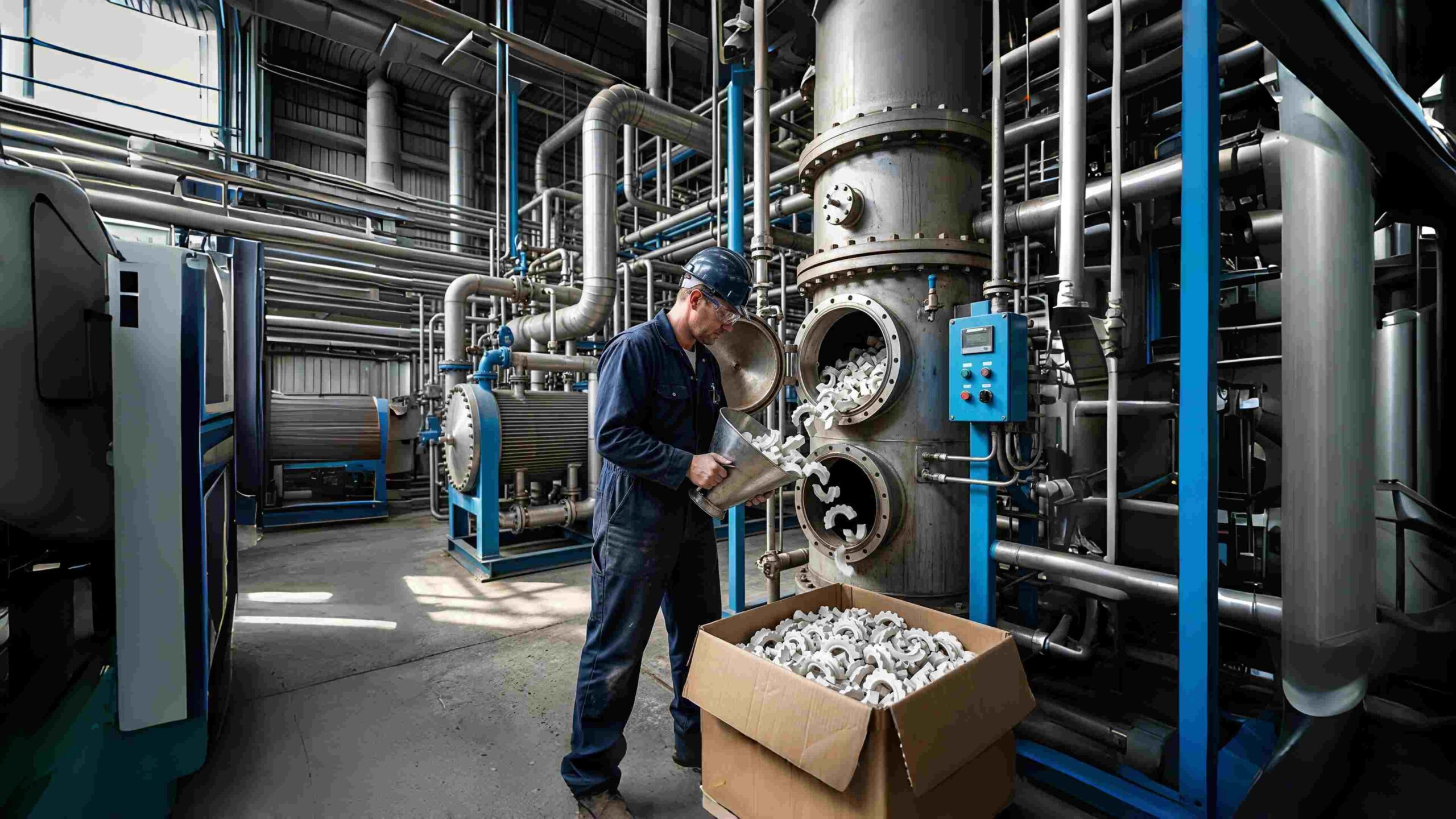
The choice of packing for your distillation, absorption, or scrubbing tower is more than a procurement item; it’s a long-term commitment to process efficiency, safety, and cost. A decision based solely on initial price can lead to recurring expenses from downtime, maintenance, and premature replacement. Ceramic Super Saddle Rings, while sometimes perceived as a premium option, are engineered to conquer the most severe process conditions. This guide moves beyond simple material lists to provide a foundational engineering comparison, highlighting why ceramic often emerges as the most reliable and economical solution over the lifespan of your installation.
The Material Battle: A Foundation of Properties
The core identity of any packing is defined by its material. The inherent properties of metal, plastic, and ceramic set the boundaries for their performance and survival in industrial environments.
Metal Packing: Strength with a Vulnerability
Packing made from materials like 304/316 stainless steel or special alloys offers excellent mechanical strength, allowing for high-efficiency designs like Metal Pall Rings. Their primary weakness, however, is electrochemical corrosion.
The Threat of Localized Attack: In environments with chlorides or fluorides, stainless steel is prone to pitting and stress corrosion cracking—failures that can occur unexpectedly and lead to catastrophic bed collapse.
Limits of Temperature: While suitable for many high-temperature applications, continuous exposure to extreme heat can lead to oxidation and scaling, contaminating process streams.
The Cost Paradox: Using exotic, corrosion-resistant alloys to solve these issues often results in a purchase price many times higher than ceramic, undermining project economics.
Plastic Packing: Affordability Within Limits
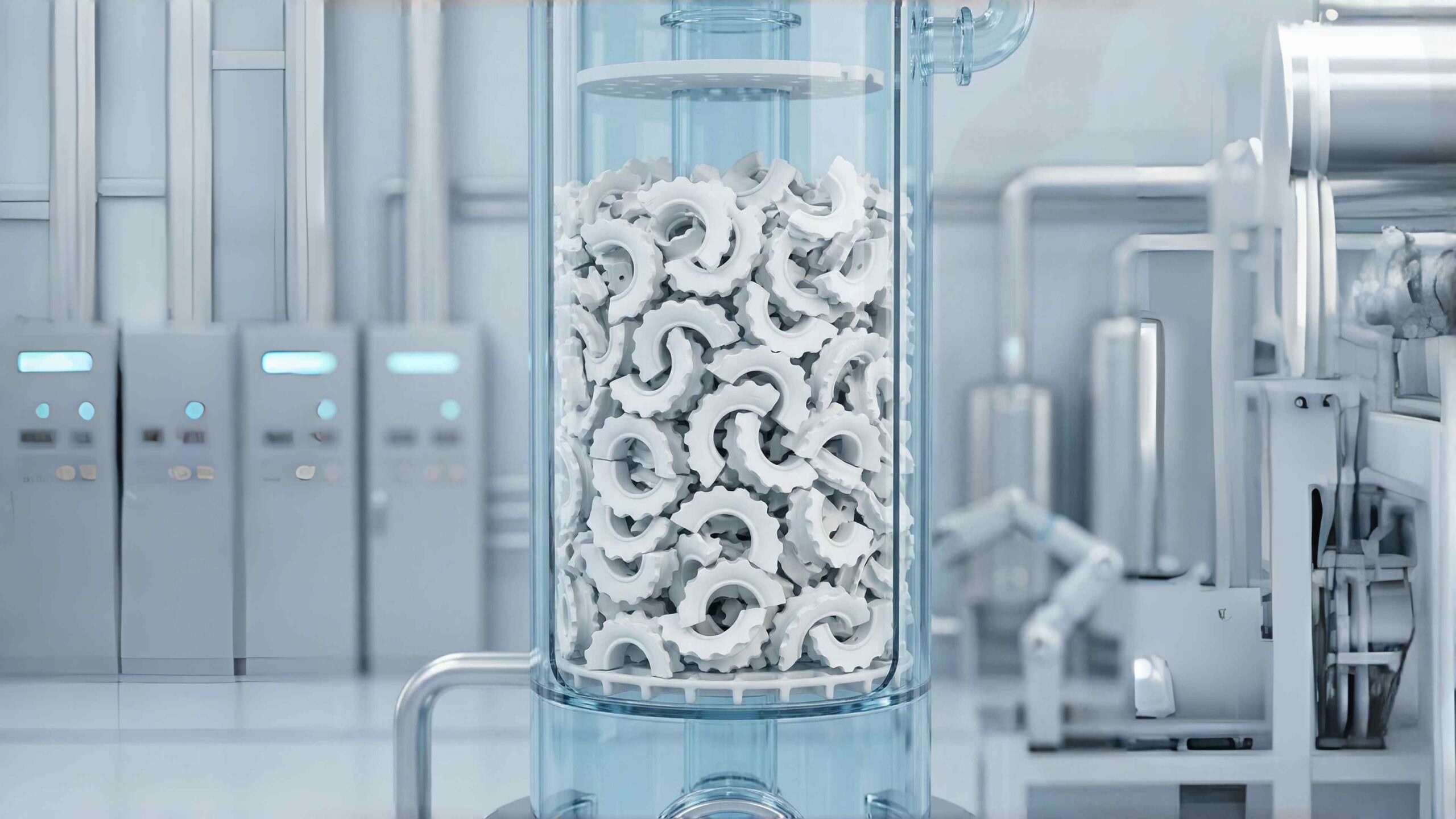
Plastic packings, such as those made from PP or PVDF, are cost-effective champions for mild, low-temperature services like many environmental scrubbers.
A Strict Temperature Ceiling: Their application is strictly bounded by temperature. Beyond their heat deflection point (typically 100-150°C), they soften, deform, and cause operational failure.
Chemical and Aging Concerns: Resistance to organic solvents can be limited, and all plastics are subject to aging, UV degradation, and potential embrittlement over time.
Surface and Strength Trade-offs: Their lower surface energy can affect liquid distribution, and their mechanical strength is not suitable for high-pressure or high-irrigation services.
Ceramic Super Saddle Rings: Engineered for Extremes
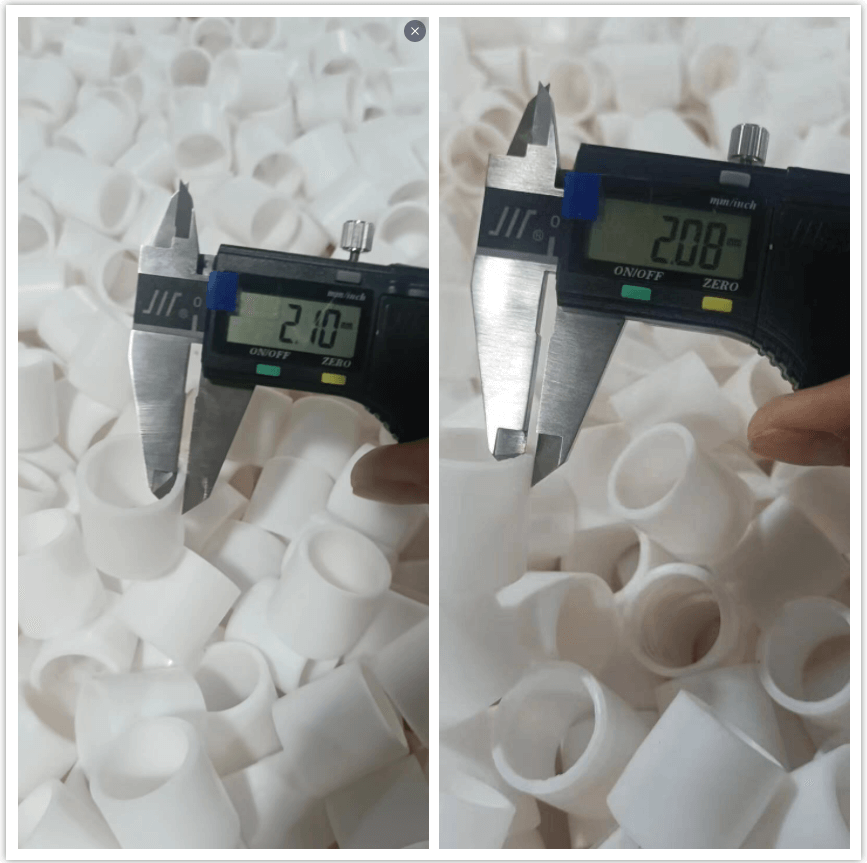
Ceramic Super Saddle Rings are defined by their mission: to perform reliably where other materials cannot. Made from high-purity, high-alumina ceramic, they are the benchmark for stability.
Unmatched Chemical Inertness: They offer near-perfect resistance to virtually all inorganic and organic acids (except hydrofluoric acid), ensuring no contamination of process media and unparalleled longevity in corrosive services like sulfuric acid production.
Master of Thermal and Mechanical Stress: Capable of withstanding continuous temperatures exceeding 1000°C with excellent thermal shock resistance, they are ideal for high-temperature gas scrubbing. Their high compressive strength ensures the packing bed maintains its structure for decades.
A Data-Driven Performance Comparison
To move from qualitative claims to quantitative decision-making, a direct comparison of key parameters is essential. The following table breaks down the critical differentiators.
Comparing Core Performance Parameters
| Performance Parameter | Metal Pall Ring (316L) | Plastic Pall Ring (PP) | Ceramic Super Saddle Ring | What This Means for Your Process |
|---|---|---|---|---|
| Max. Continuous Temp. | ~400°C | ~100°C | >1000°C | Ceramic is the only choice for true high-temperature processes. |
| Chloride Ion Resistance | Poor (Pitting Risk) | Good | Excellent | Metal is a high-risk choice for HCl or seawater-affected services. |
| Conc. Sulfuric Acid Resistance | Poor (Rapid Corrosion) | Poor (Carbonization) | Excellent | The industry-standard solution for sulfuric acid drying/absorption towers. |
| Compressive Strength | High | Low | Very High | Ceramic maintains bed structure under load; plastic can deform. |
| Typical Dry Packing Factor (m⁻¹) | ~50-70 | ~40-60 | ~50-70 (Lower ΔP at parity) | A key measure of pressure drop. The “super” design optimizes for lower energy consumption. |
| Lifecycle Cost (Severe Service) | Very High (Frequent Replacement) | High (Short Service Life) | Lowest (Long-Term Investment) | For harsh conditions, ceramic’s durability delivers the lowest total cost of ownership. |
The “Dry Packing Factor” is a key metric for pressure drop; a lower value indicates better hydraulic performance and lower operating energy costs for the same efficiency.
Making the Right Choice: An Application-First Approach
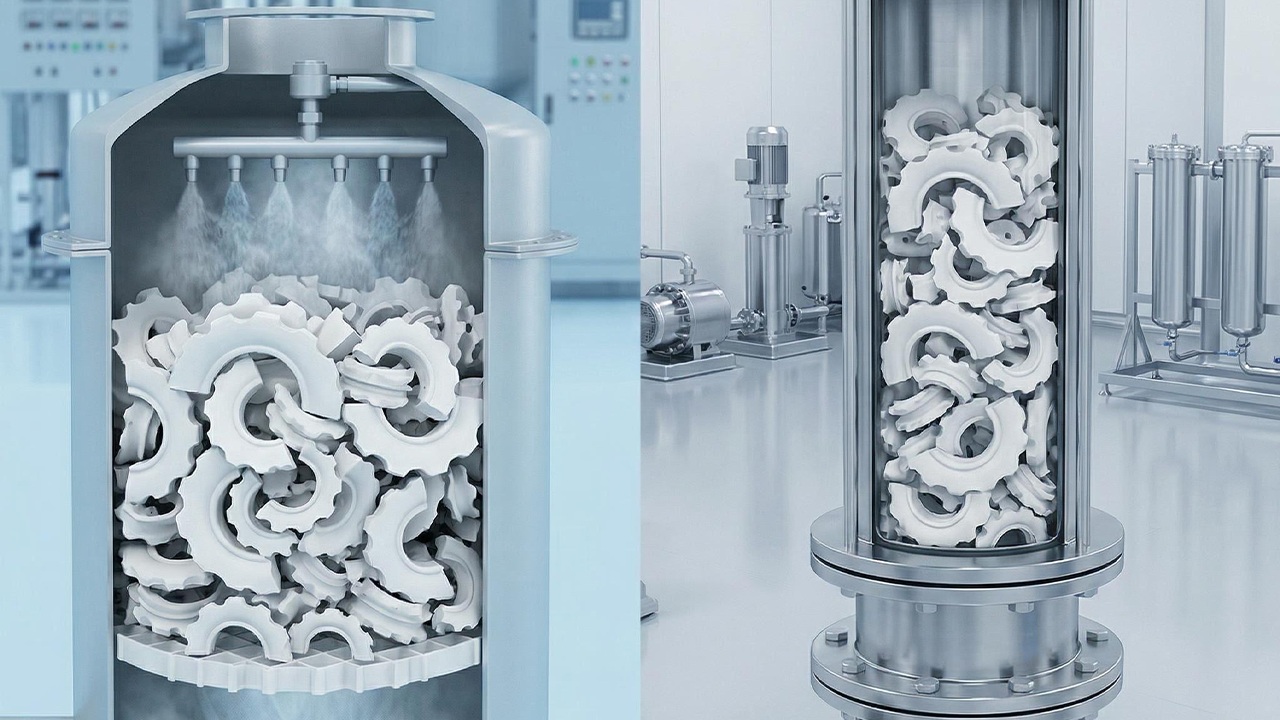
The optimal selection emerges from a clear understanding of your process conditions. Here is a practical decision framework.
Step 1: Define the Process Environment
Start with the non-negotiable constraints of your system:
Temperature: Is the process consistently above 150°C? If yes, plastic is eliminated.
Chemistry: Does the medium involve strong acids (e.g., H2SO4, HNO3, HCl), oxidizers, or complex solvents? This challenges metal and many plastics.
Impurity Constraints: Is product purity critical, excluding potential metal ion contamination from corroding packing?
Step 2: Evaluate the Demand for Reliability
Consider the cost of failure:
What is the financial impact of an unplanned shutdown to replace failed packing?
Is the system designed for a multi-year run length without internal maintenance?
If operational continuity is paramount, the superior durability and predictable performance of Ceramic Super Saddle Rings justify the investment.
Step 3: Conduct a Total Cost of Ownership Analysis
Look beyond the invoice price. The true cost includes:
Initial Purchase Price
Expected Service Life
Energy Costs (influenced by packing pressure drop)
Cost of Downtime for Replacement
Disposal Costs for Spent Packing
In corrosive or high-temperature services, the extended life and stability of ceramic packing almost always result in the most favorable financial outcome over a 5-10 year period. As a leading packing manufacturer, Ayrtter provides TCO analysis to quantify these long-term benefits.

Are ceramic packings too fragile for installation?
This is a common misconception. Industrial ceramic packing has very high compressive strength. While care is needed during handling, proper installation methods like wet loading techniques (pouring into a water-filled tower) minimize breakage to less than 1%. This negligible loss is offset by a service life that can last over a decade in harsh conditions. Ayrtter provides detailed installation guidance.
Can ceramic packing be used for strong alkali (caustic) services?
Ceramic packing offers good resistance to many alkalis at moderate temperatures. However, for high-temperature, high-concentration caustic services (e.g., hot, concentrated NaOH), ceramic may not be suitable. In such cases, Ayrtter recommends evaluating specialized plastics like PVDF or nickel alloys, and can provide specific guidance based on your process conditions.
How does Ayrtter ensure the quality of its Ceramic Super Saddle Rings?
Ayrtter maintains stringent quality control from raw material selection through sintering. Our Ceramic Super Saddle Rings are produced to consistent specifications, and we provide material test reports for key properties—including chemical composition, acid resistance, and mechanical strength—to guarantee performance and longevity for our clients.
Our process is unique. How do we get a definitive recommendation?
Packing selection is a core engineering service. We recommend submitting your detailed process parameters (medium, concentrations, temperatures, pressures, column dimensions) to Ayrtter’s technical team for a free, unbiased review and a tailored recommendation report covering all packing types.
Conclusion: Investing in Process Certainty
Choosing tower packing is an investment in your process’s future performance. For mild, well-defined services, plastic or metal may serve adequately. However, when the process is harsh—defined by heat, corrosion, and the need for unwavering reliability—Ceramic Super Saddle Rings stand apart. They transform packing from a recurring maintenance item into a foundational component of long-term, stable, and cost-effective operation.
Expert Commentary & Analysis:The selection between metal, plastic, and ceramic packing transcends a simple material choice; it is a direct investment in asset integrity and operational predictability. Initial cost comparisons are misleading for severe-duty applications. The engineering data is clear: Ceramic Super Saddle Rings provide the lowest risk and lowest total cost of ownership in environments where corrosion or temperature are factors.Their performance eliminates the largest variable in process operations—unplanned downtime. For engineers specifying equipment for sulfuric acid, chemical processing, or high-temperature gas cleaning, specifying high-performance ceramic packing from a trusted supplier like Ayrtteris not an operational expense, but capital preservation.
Your Next Step with Ayrtter
Explore the Product Details: Review specifications and data for Ayrtter’s Ceramic Super Saddle Rings in our product center.
Request a Professional Analysis: For applications involving strong acids, high temperatures, or stringent reliability needs, contact Ayrtter’s engineering team with your process parameters for a detailed review and recommendation.
Learn from Experience: Discover how Ayrtter’s packing solutions have solved complex challenges in our industry case studies.
SEO & Publishing Data
1. SEO TDK
Title: Ceramic Super Saddle Ring vs Metal/Plastic Packing: China Supplier & Manufacturer Guide | Ayrtter
Meta Description: Metal vs Plastic vs Ceramic Packing? Compare performance & lifecycle cost. Discover why Ayrtter, a leading China manufacturer & factory, recommends Ceramic Super Saddle Rings for harsh chemical processes.
2. Tags
Ceramic Super Saddle Ring, Metal Pall Ring, Plastic Packing, Random Tower Packing, Acid Resistant Packing, High Temperature Packing, China Packing Supplier, Packing Manufacturer, Chemical Processing Packing, Ayrtter
3. Structured Data (FAQPage Schema)