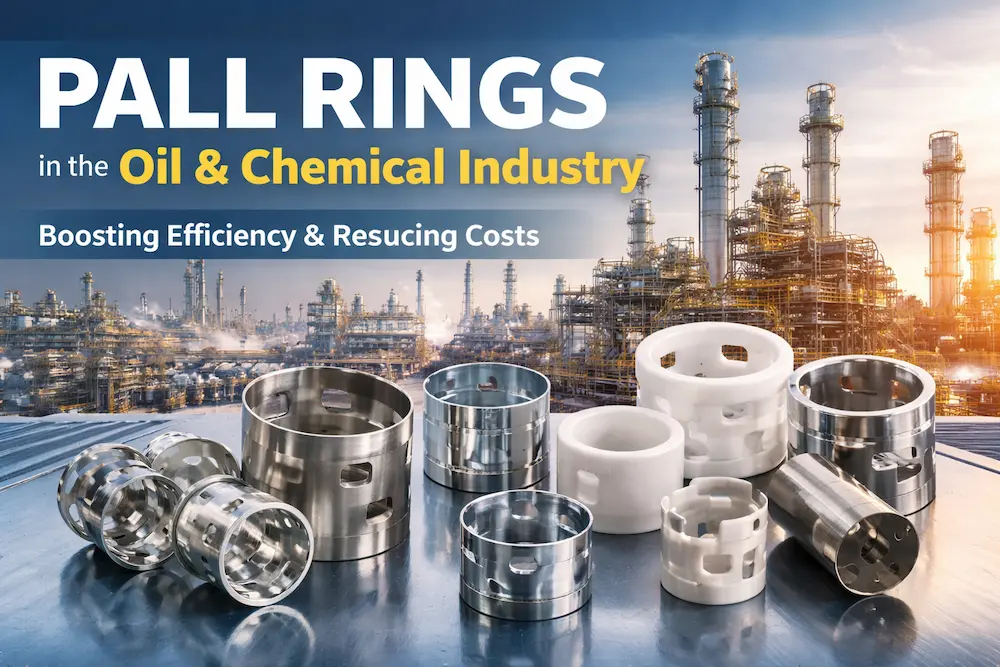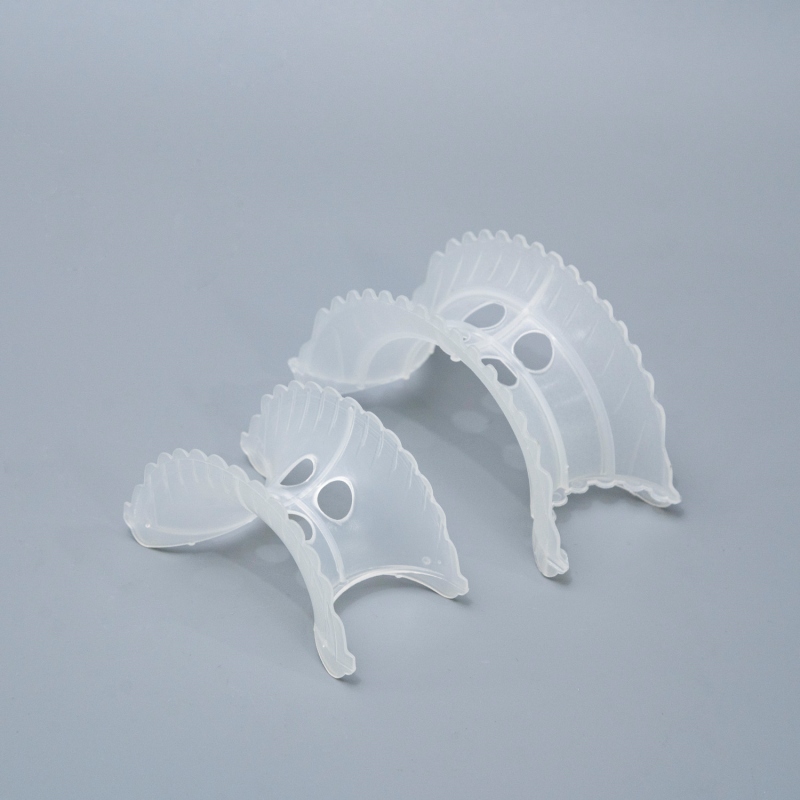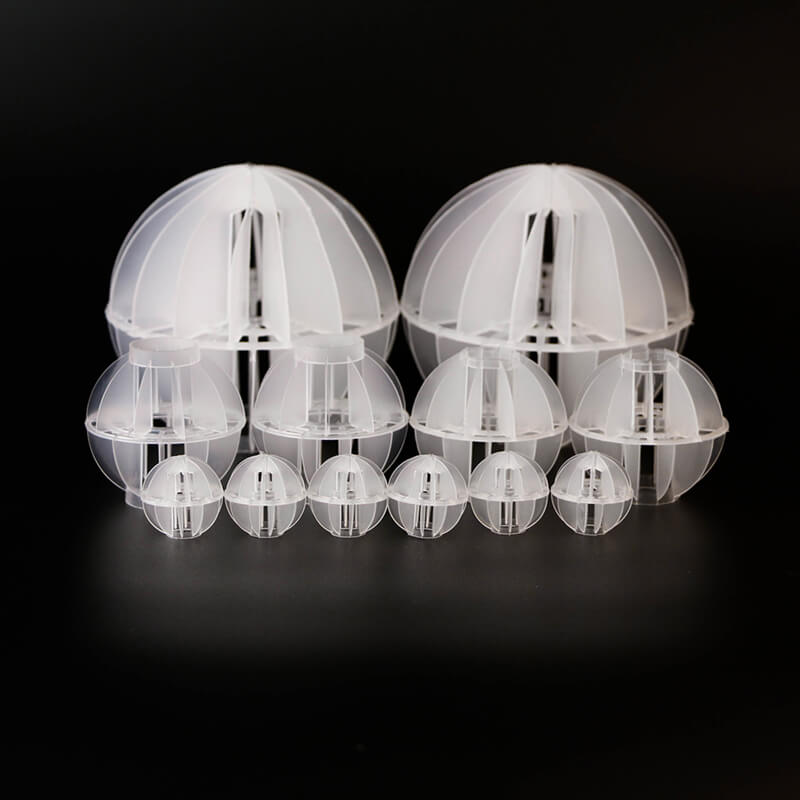
Structured packing is a key component in industrial processes such as distillation and absorption. This type of packing, with its precise geometric design, helps optimize gas-liquid contact efficiency, reduce pressure drop, and enhance overall system performance. In this article, we will dive into what structured packing is, its applications, advantages, and how it outperforms other types of packing.
What is Structured Packing?
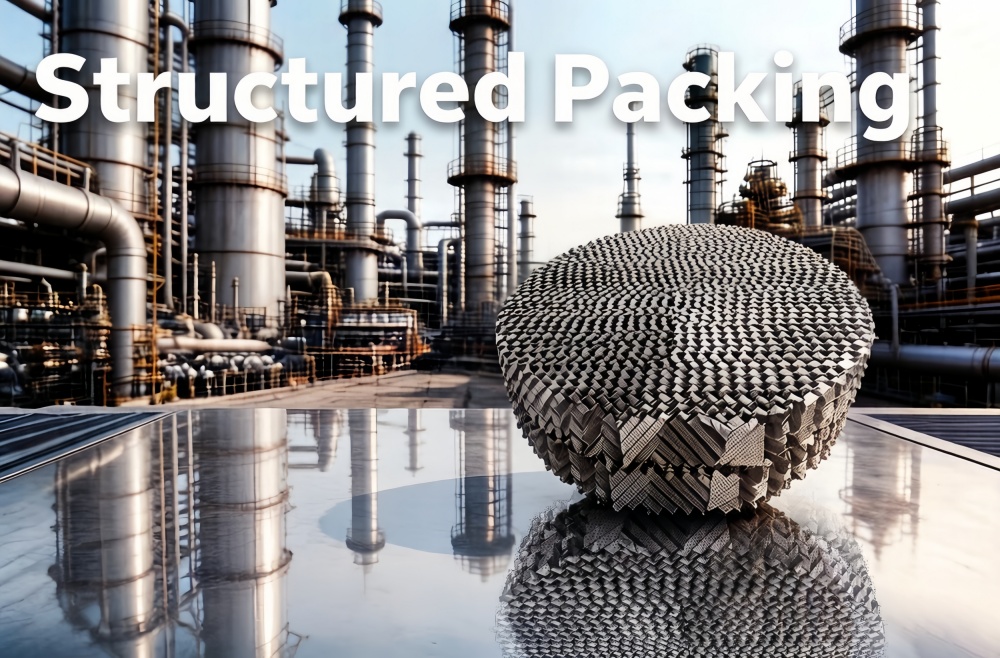
Structured packing is a type of packing material used in various industrial applications to improve the efficiency of gas-liquid mass transfer. Unlike random packing, which consists of irregularly shaped materials like pall rings or Raschig rings, structured packing consists of precisely engineered elements with a regular, uniform shape—usually corrugated metal, plastic, or ceramic sheets that are stacked in a column.
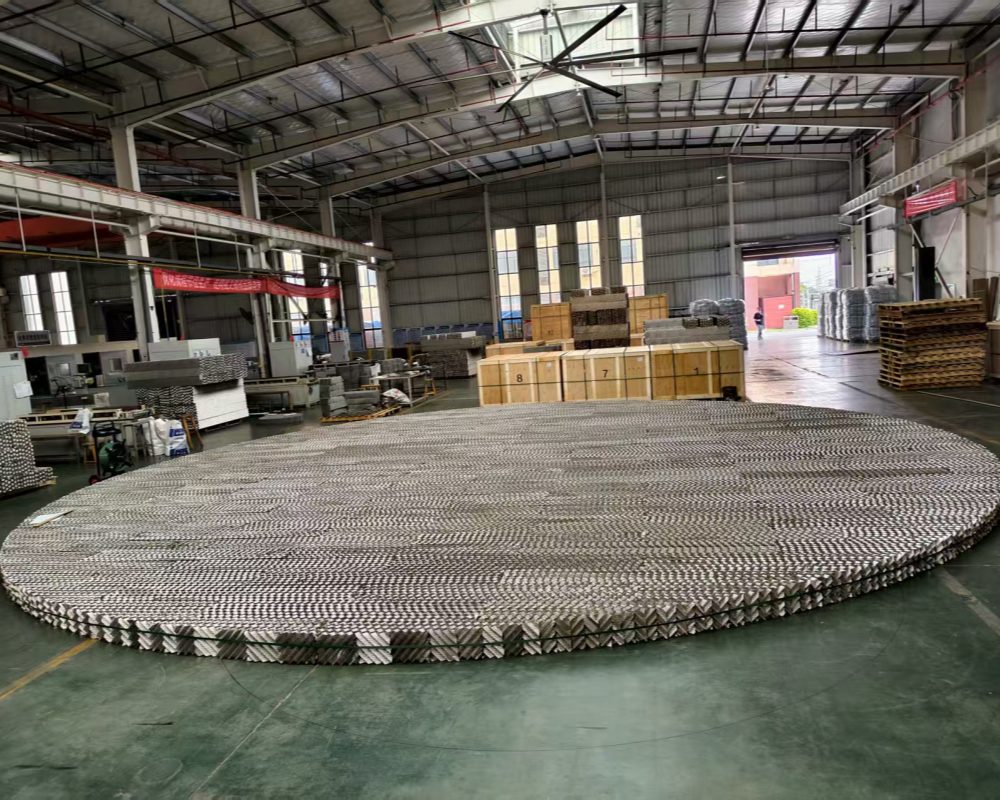
The structured nature of this packing ensures better control over fluid flow and maximizes the surface area for gas-liquid interaction, resulting in higher efficiency for separation processes like distillation and absorption.
Key Features of Structured Packing:
High Surface Area: The design of structured packing provides a high surface area, allowing for greater gas-liquid contact.
Reduced Pressure Drop: The organized design reduces resistance to fluid flow, which leads to a lower pressure drop compared to other packing types.
Controlled Flow Distribution: The uniform structure ensures consistent flow of gas and liquid, improving process efficiency.
Applications of Structured Packing
Structured packing is used primarily in processes where efficient separation of components is crucial. Some of its key applications include:
Application Description
Distillation Columns Structured packing improves separation efficiency by providing better vapor-liquid contact.
Absorption Towers Used for gas absorption in processes like pollution control and chemical scrubbing.
Chemical Reactors Ensures better interaction between gases and liquids, improving reaction rates and product yield.
These applications highlight the importance of structured packing in enhancing the efficiency of industrial processes.
Expert Insights on Structured Packing Efficiency
Expert Insight 1: Mass Transfer Efficiency
Dr. John Adams, a senior chemical engineer, shares:
“Structured packing provides a superior method of enhancing mass transfer. Unlike random packing, the uniformity of structured packing ensures a consistent flow and more efficient separation, which ultimately leads to lower energy costs and higher throughput.”
Expert Insight 2: Material Selection for Durability
“Choosing the right material for structured packing is essential,” says Dr. Susan Wright, a materials scientist.
“Materials like stainless steel or advanced ceramics offer excellent durability, especially for high-temperature or corrosive environments. Plastic options are more cost-effective but may be used in less demanding conditions.”
Expert Insight 3: Operational Efficiency
David Lin, an operations manager at a leading chemical plant, explains:
“Since we switched to structured packing in our distillation columns, we’ve seen a reduction in energy consumption by 18% due to the reduced pressure drop and improved mass transfer efficiency. It has made a significant impact on our bottom line.”
Why Choose Structured Packing from Ayrtter?
Ayrtter offers high-quality **structured packing** solutions designed to enhance operational efficiency. Our structured packing materials, including **metal random packing** and **plastic rosette rings**, provide exceptional performance across a range of industrial processes, ensuring higher separation efficiency and reduced energy consumption. Choose Ayrtter to optimize your mass transfer operations.
Explore our products: **Structured Packing** **Metal Random Packing** **Plastic Random Packing**
The Science Behind Structured Packing Efficiency
Structured packing has been shown to significantly increase the efficiency of mass transfer operations. The uniform, open structure of the packing elements reduces resistance to gas and liquid flow, which decreases the pressure drop in the column. The increased surface area also allows for better gas-liquid interaction, resulting in improved separation or absorption rates.
In several industry studies, such as those conducted by the University of Texas, the use of structured packing in distillation columns has led to up to a 25% improvement in separation efficiency, alongside a reduction in energy usage by as much as 15%.
Packaging Insight: Why Ayrtter’s Structured Packing Sets the Standard
At Ayrtter, we specialize in designing and providing high-performance structured packing solutions that meet the growing demands of industries worldwide. Our structured packing ensures minimal pressure drop, reduced operational costs, and improved separation efficiency. Whether you require **plastic random packing** for cost-effective solutions or **metal random packing** for high-temperature operations, our products are designed to meet diverse needs.
Choose Ayrtter for long-term, energy-efficient solutions that deliver reliable performance.
FAQ: What is Structured Packing?
Q1: How does structured packing improve mass transfer efficiency?
A1: Structured packing improves mass transfer efficiency by providing a large surface area for gas-liquid contact while minimizing resistance to fluid flow, resulting in better separation and absorption.
Q2: What materials are used in structured packing?
A2: Structured packing is made from a variety of materials, including metal, plastic, and ceramic, depending on the application. Metal options are preferred for high-temperature or corrosive environments, while plastic options are used in less demanding settings.
Q3: How does structured packing compare to random packing?
A3: Structured packing generally offers higher efficiency than random packing due to its uniform design, which reduces pressure drop and provides better flow distribution for gas-liquid contact.
Q4: What industries benefit from using structured packing?
A4: Industries such as chemical processing, petrochemicals, environmental protection, and food processing all benefit from using structured packing for efficient distillation, absorption, and chemical reactions.
Q5: How long does structured packing last?
A5: The lifespan of structured packing depends on the material and operating conditions. Metal structured packing typically lasts longer than plastic packing, especially in high-temperature or aggressive environments.