The Material Selection Handbook for Petrochemical Towers: 316L, PVDF, or Ceramic Structured Packing?
— A Practical Framework to Stop Guessing and Start Optimizing for Performance & Cost
Within every distillation, absorption, and stripping column in a refinery or chemical plant lies a critical component that rarely gets the attention it deserves: the structured packing. Think of it as the heart’s valves—if they fail, the entire system is at risk.
All too often, material selection is ruled by habit (“We always use 316L”) or short-term economics (“This one is cheaper now”). This is a high-stakes gamble. The wrong material can lead to unseen corrosion, sudden catastrophic failure, unplanned shutdowns, and product contamination—costs that can dwarf the initial price of the packing itself.
The good news is that selecting the right material is a systematic process, not a guessing game. With a clear understanding of the “candidates” and a disciplined evaluation framework, you can make a choice that ensures reliability, efficiency, and the lowest total cost of ownership. As a provider of the full spectrum of solutions—Metal, Plastic, and Ceramic Structured Packing—Ayrtter is positioned to offer unbiased guidance to help you navigate this decision.
Candidate Profile: 316L Stainless Steel – The Seasoned Veteran with a Critical Weakness
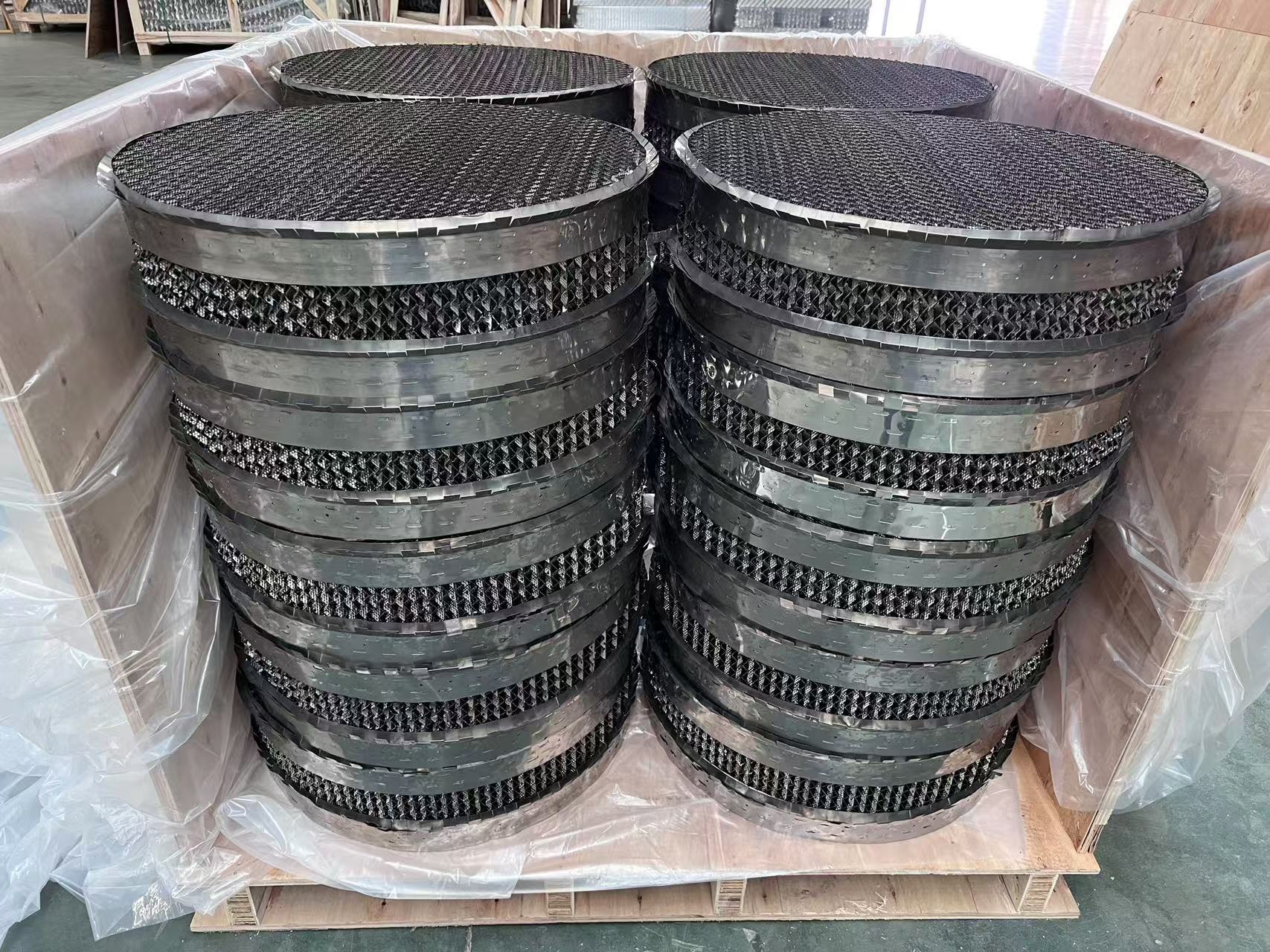
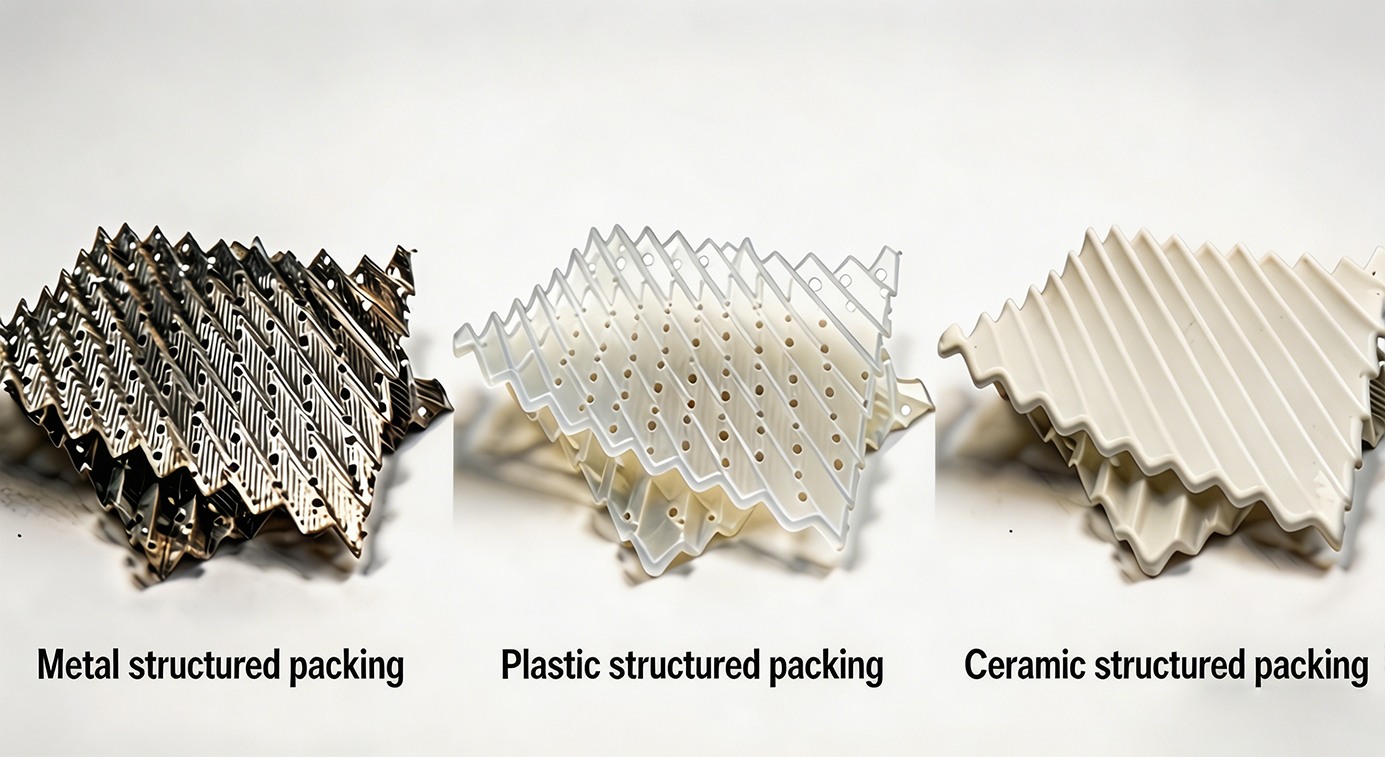
The Role: The industry workhorse, a staple of Ayrtter’s Metal Structured Packing line.
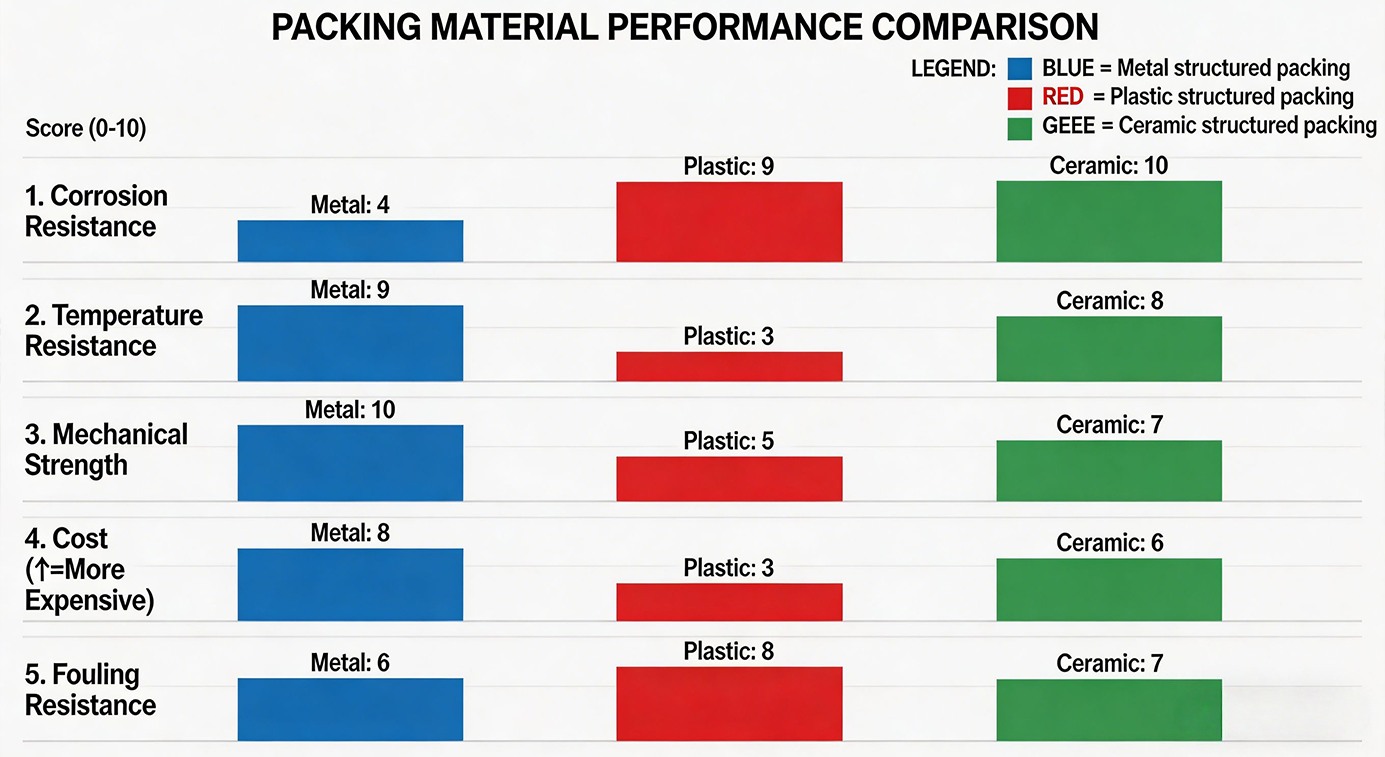
Core Strengths: High strength for high-pressure towers, excellent heat tolerance (up to ~450°C), and a proven track record with hydrocarbons and many chemicals.
The Fatal Flaw: Chloride Stress Corrosion Cracking (CSCC). In environments with chlorides above 60°C, it can fail suddenly. This critical risk is often understated.
Hiring Advice: “Assign it to demanding, high-temperature duties, but keep it far away from wet, chloride-containing streams.”
Candidate Profile: PVDF (Polyvinylidene Fluoride) – The Corrosion Specialist with a Temperature Limit
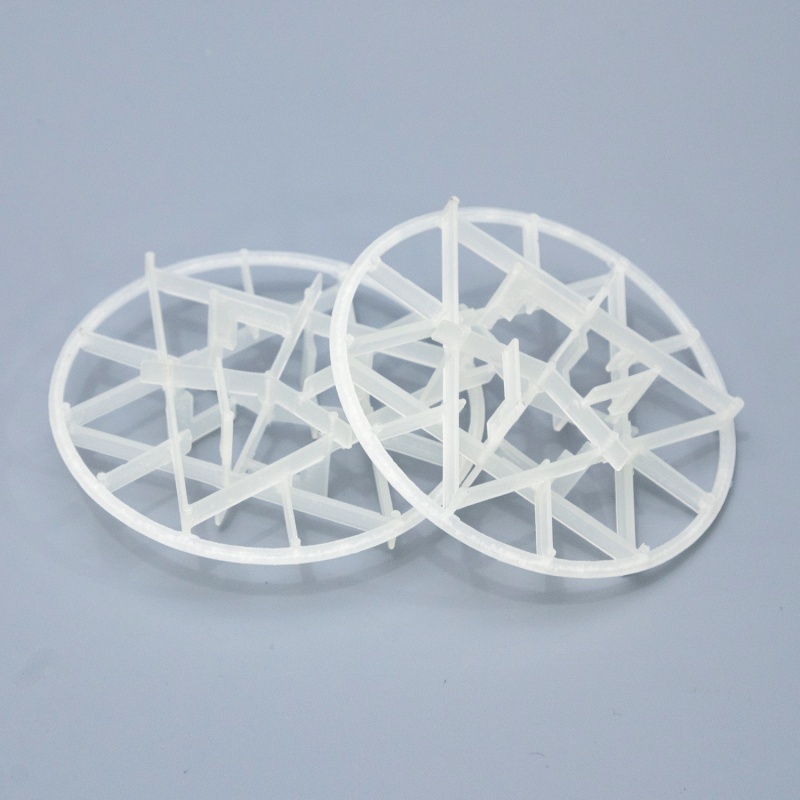
The Role: Ayrtter’s PVDF Structured Packing, the expert for aggressive chemistry.
Core Strengths: Unmatched chemical resistance to strong acids, bases, halogens, and oxidants. It is the default solution for lithium-ion battery effluent and high-concentration VOCs abatement. Lightweight for easier maintenance.
The Limiting Factor: The Thermal Ceiling (~150°C). Above this, it can creep and degrade.
Hiring Advice: “This is your for conquering the most corrosive media, but the operating environment must stay ‘cool’.”
Candidate Profile: Ceramic Packing – The Extreme Environment Specialist Who Needs Careful Handling
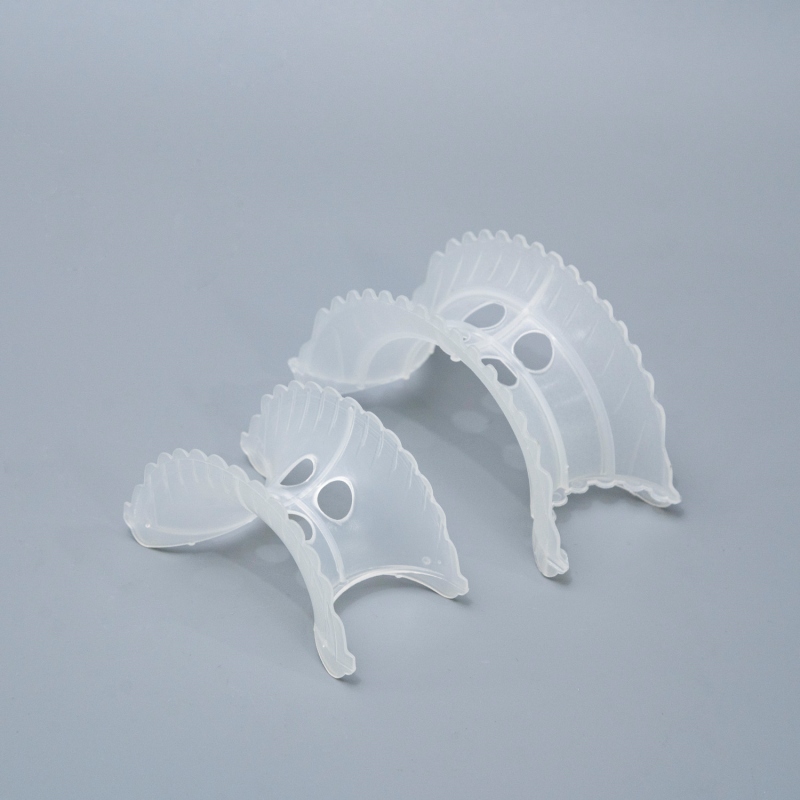
The Role: Ayrtter’s Ceramic Structured & Random Packing, built for the most punishing conditions.
Core Strengths: Unaffected by temperatures exceeding 1000°C and nearly all organic solvents. The only choice for coker gas desulfurization or high-temperature gas scrubbing.
The Critical Weakness: Brittleness. It is fragile and dislikes mechanical impact and thermal shock. Requires careful handling.
Hiring Advice: “Deploy it into the hottest, most chemically aggressive battles, but you must handle it with care.”
Performance & Risk Summary: Your At-a-Glance Guide
| Characteristic | 316L Stainless Steel (The Veteran) | PVDF (The Corrosion Specialist) | Ceramic (The Extreme Specialist) |
|---|---|---|---|
| Key Strength | Mechanical Strength & High-Temp Operation | Broad, Superior Chemical Resistance | Extreme Temperature & Solvent Resistance |
| Achilles’ Heel | Chloride Stress Corrosion Cracking | Temperature Limit (~150°C) | Brittleness & Thermal Shock Risk |
| Ideal Duty | High-pressure/temp distillation, non-corrosive organics. | Chloride/Fluoride streams, strong acids/bases, VOC scrubbing. | High-temperature gas cleaning, coker units, specialized synthesis. |
| Cost Perspective | Standard solution, moderate CAPEX. | Often the lowest TCO in corrosive duty, higher CAPEX. | High CAPEX, but the only viable solution in its niche. |
The Four-Step Selection Framework
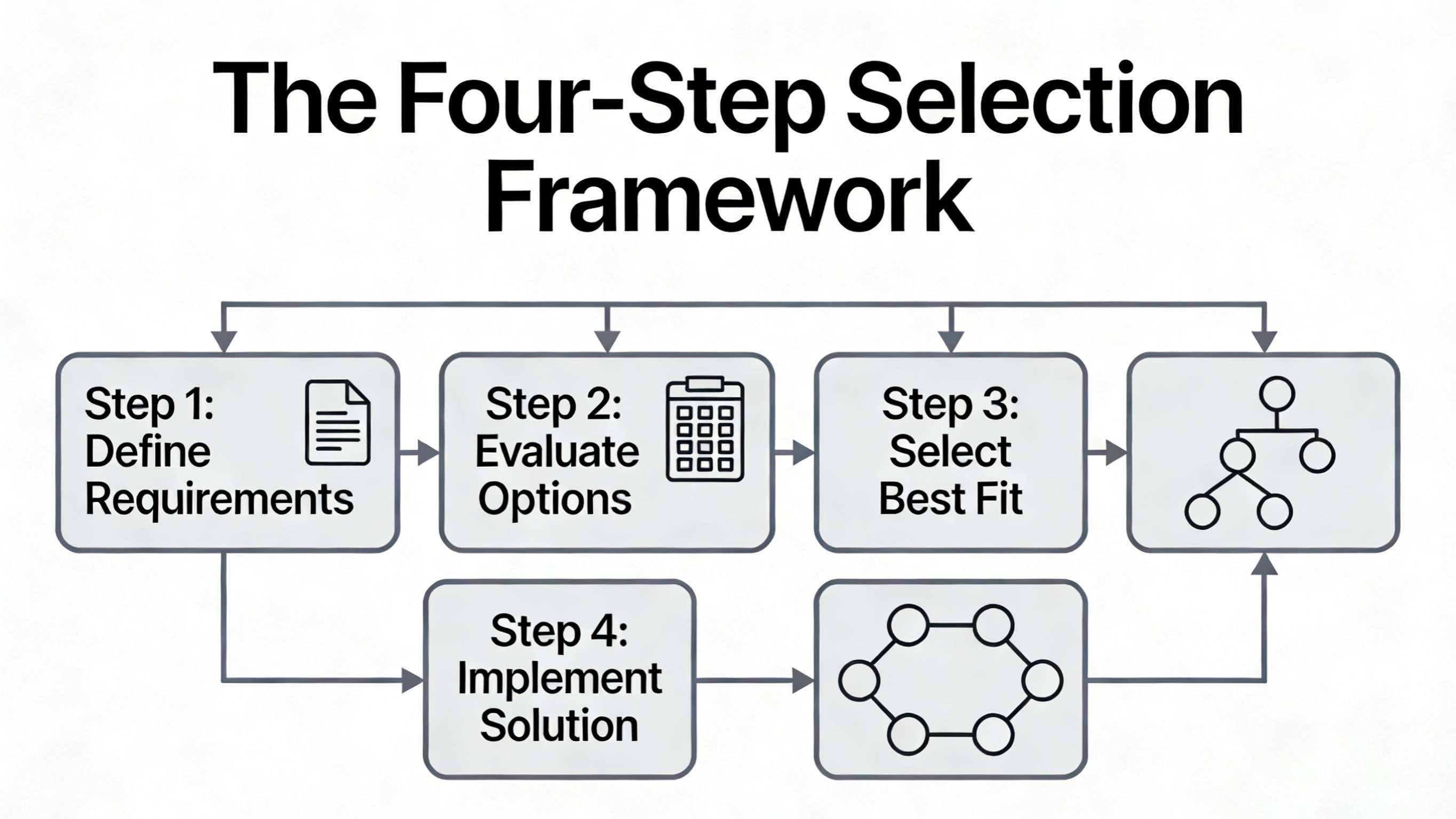
With a clear understanding of the candidates, follow this disciplined framework to arrive at the optimal, defendable choice for your specific application.
Step 1: Diagnose Your Process Stream – Know What You’re Working With
Interrogate your process data: Does it contain chlorides or fluorides? What is the pH? Is the temperature consistently above 150°C? Is it prone to fouling? This is the foundational step.
Step 2: Define the Job Requirements – What Does the Tower Demand?
Match the remaining candidate materials to the tower’s physical needs. For high-pressure services, the robustness of metal packing is key. If frequent cleaning is needed, the lightweight PVDF packing offers major operational savings.
Step 3: Run the Lifetime Numbers – The Total Cost of Ownership (TCO) Analysis
Move beyond Capital Expenditure (CAPEX). Evaluate Total Cost of Ownership (TCO): Purchase + Installation + Energy/Maintenance over 10 yrs + (Risk of Failure × Cost of Shutdown).
Scenario Analysis: For a Chlorinated Solvent Recovery Scrubber, 316L may have a lower price but a high risk of costly failure. PVDF, with a higher initial cost but near-zero corrosion risk, often has a lower expected TCO. True savings come from preventing failures.
Step 4: Vet Your Partner – Supplier Qualification is Your Final Safeguard
Your chosen material is only as good as the supplier. A reliable partner like Ayrtter should provide: 1) Material Certification (mill test reports), 2) Performance Data for your stream, and 3) Proven Case Studies from similar applications (e.g., coker desulfurization).
—