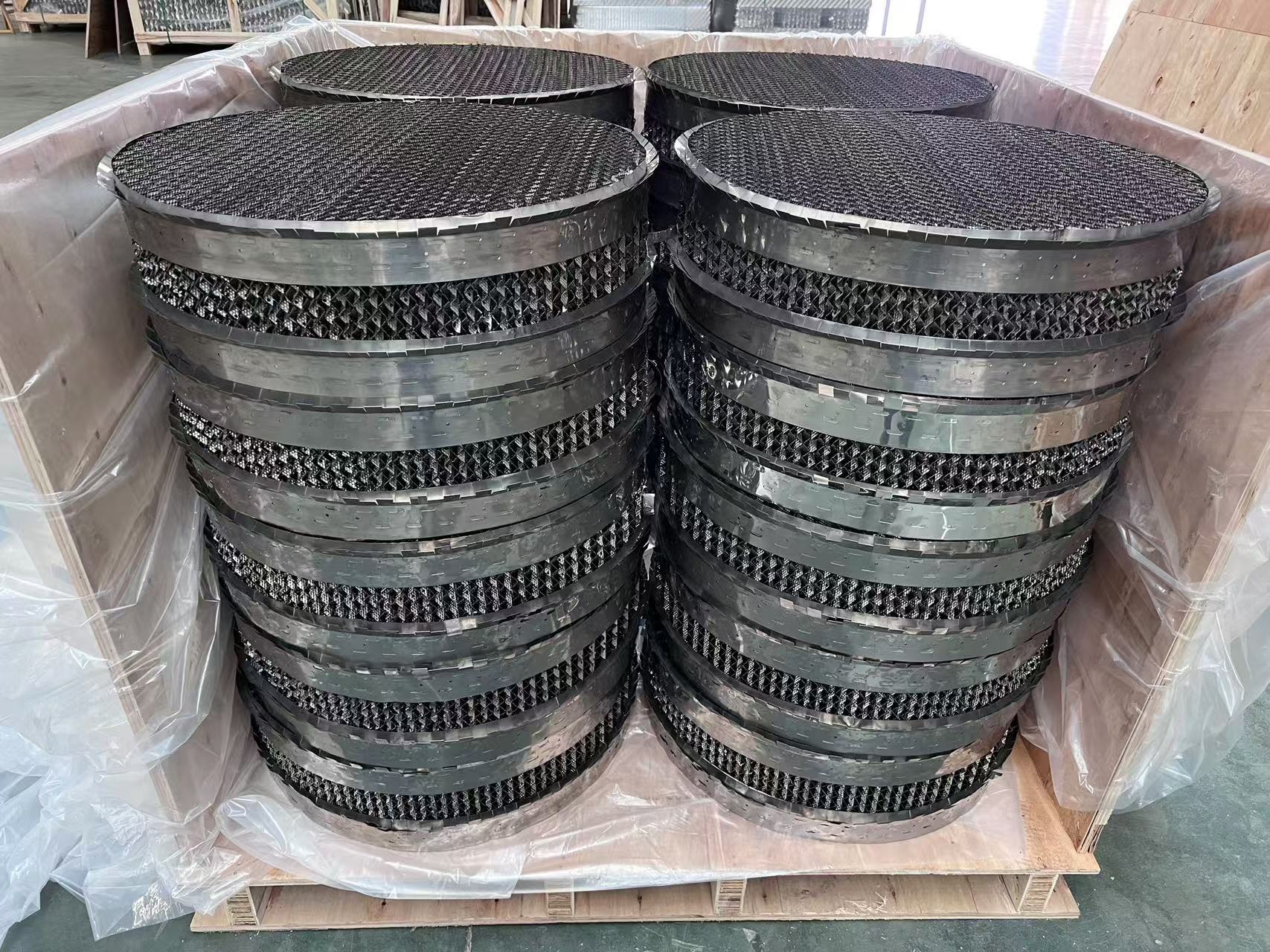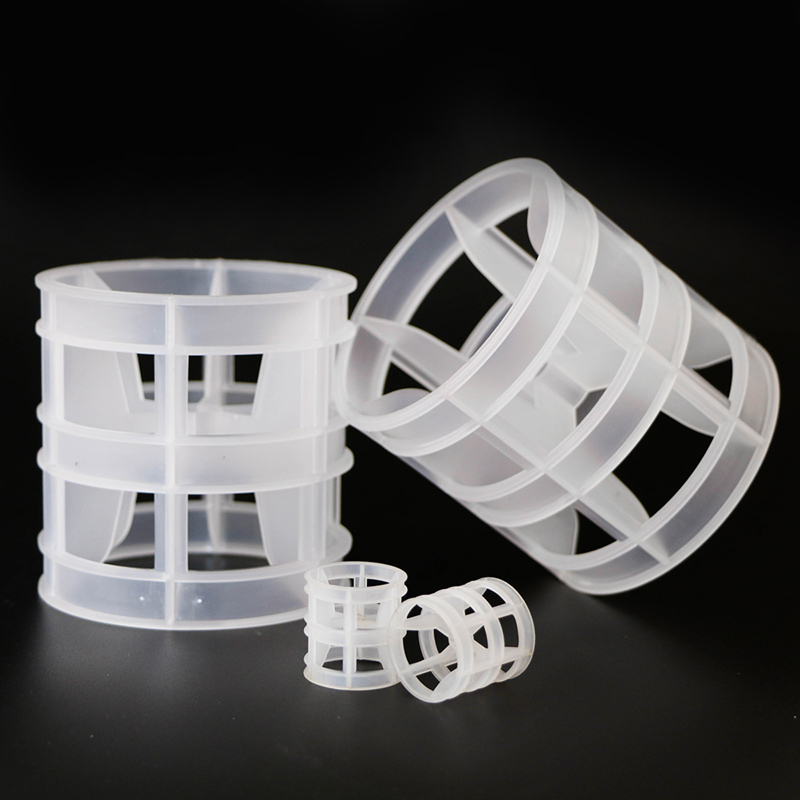
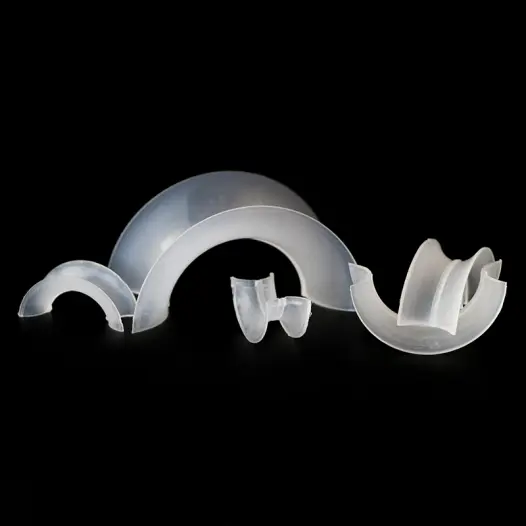
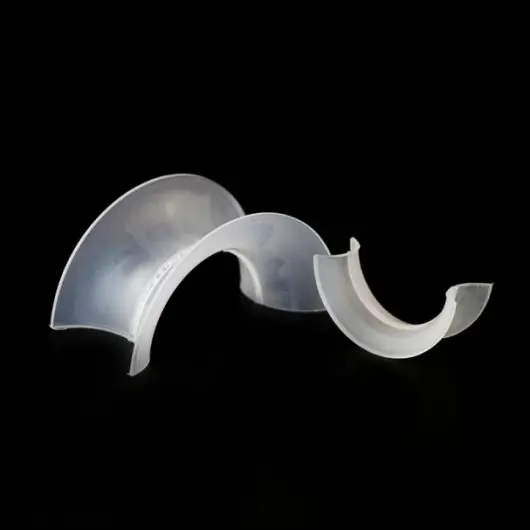
Intalox saddle packing is a high-performance random tower packing widely used in desulfurization towers, wet scrubbers, absorption towers, and flue gas treatment systems. Its asymmetrical saddle shape creates interconnected void spaces, improves gas distribution, prevents nesting, and reduces scaling tendency.
In wet desulfurization systems, excessive packing resistance can increase fan power consumption, restrict flue gas flow, and reduce operating stability. By maintaining open flow channels and reducing local pressure drop concentration, Intalox saddle packing supports lower resistance operation while keeping effective gas-liquid contact.
- High void fraction helps flue gas pass through the packing bed with less resistance.
- Curved saddle surfaces distribute gas more evenly across the tower cross-section.
- Asymmetrical geometry prevents nesting and maintains long-term bed openness.
- Smooth PP or RPP surfaces help reduce slurry adhesion and scaling risk.
Best Used For
Intalox saddle packing is suitable for limestone-gypsum wet desulfurization, ammonia desulfurization, industrial flue gas scrubbing, chemical absorption, exhaust gas treatment, and other gas-liquid contact systems where low pressure drop and anti-clogging performance are important.
It is especially valuable when the tower needs stable flue gas flow, lower fan load, longer cleaning intervals, and reliable long-term desulfurization performance.
Typical void fraction for Intalox saddle packing
Potential fan energy reduction under suitable conditions
Common materials for wet desulfurization systems
Lower bed resistance than many traditional packings
Why Operating Resistance Matters in Desulfurization Towers
In a desulfurization tower, flue gas must pass through the packing bed while contacting scrubbing liquid. If the packing bed creates excessive resistance, the fan must work harder to maintain gas flow. This increases electricity consumption and may reduce system stability.
High operating resistance can also cause uneven gas distribution, local high-velocity zones, poor gas-liquid contact, slurry accumulation, and reduced desulfurization efficiency. For wet flue gas desulfurization systems, the ideal packing should not only provide enough surface area for mass transfer but also maintain open channels for gas flow and liquid flushing.
Intalox saddle packing is designed to solve this balance. Its curved, open, and asymmetrical structure reduces resistance while maintaining gas-liquid contact efficiency. That is why it is often selected as a practical random packing for desulfurization and scrubbing towers.
Four Ways Intalox Saddle Packing Reduces Operating Resistance
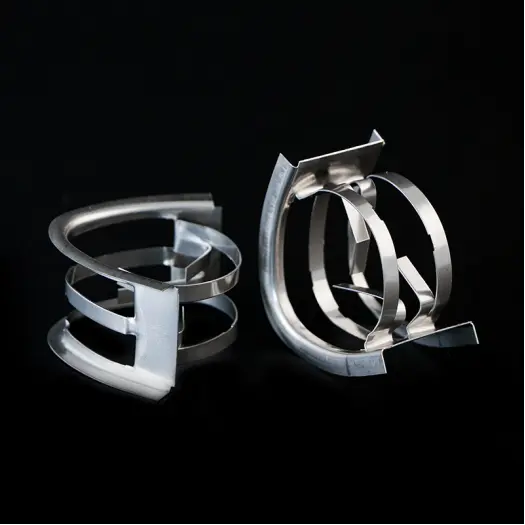 |  |  |
Intalox saddle packing reduces operating resistance in desulfurization towers through four key mechanisms: high void fraction, curved gas distribution, anti-nesting geometry, and smooth anti-scaling material surfaces. High Void Fraction Provides Unobstructed Gas Flow Channels
More interconnected void space means less physical resistance for flue gas passage.
Intalox saddle packing is an improved version of traditional saddle-shaped random packing. Its curved saddle body, asymmetrical lobes, and surface openings or ribs allow packing pieces to contact mainly at points rather than large surface areas during random stacking.
This geometry creates abundant interconnected void spaces inside the packing bed. The void fraction of Intalox saddle packing can exceed 90%, which is generally higher than Pall rings at about 75–85% and Raschig rings at about 60–70%. A higher void fraction allows flue gas to pass through the tower with less physical obstruction, resulting in a lower pressure drop.
For desulfurization towers, this matters directly. Lower pressure drop reduces the load on the induced draft fan or booster fan, helping the system maintain stable gas flow with lower energy demand.Curved Saddle Surfaces Force Uniform Gas Distribution
The curved profile helps avoid straight-through gas flow and local resistance concentration.
Traditional packings such as Raschig rings have relatively straight internal walls. In some operating conditions, gas may follow the path of least resistance and pass through the bed too directly. This can create local high-velocity zones, increase resistance loss, and shorten gas-liquid contact time.
The continuous curved surfaces of Intalox saddle packing force flue gas to change direction repeatedly as it moves through the packing layer. Instead of concentrating in a few easy flow paths, the gas is distributed more evenly across the tower cross-section.
More uniform gas distribution reduces local pressure drop concentration and improves overall bed utilization. This supports smoother operation and better gas-liquid contact consistency inside the desulfurization tower.Asymmetrical Design Prevents Nesting and Maintains Long-Term Low Resistance
Anti-nesting geometry keeps the packing bed open even after long-term operation.
Traditional Berl saddle packing may nest or interlock during stacking because of its uniform curvature. Once nesting occurs, the effective void space in the bed decreases. Local pressure drop rises, dead zones appear, and sludge accumulation becomes more likely.
Intalox saddle packing uses asymmetrical curved lobes to reduce this risk. Regardless of how the pieces are stacked, adjacent packing elements tend to maintain point contact rather than tightly interlocking with each other.
This open internal structure allows gas and scrubbing liquid to flush through the bed more effectively. Sludge, gypsum crystals, and suspended solids are less likely to remain in dead corners. As a result, pressure drop is less likely to increase progressively over long-term operation.
Smooth Surface and Material Properties Reduce Scaling
PP and RPP surfaces help reduce slurry adhesion and support easier liquid flushing.
Intalox saddle packing used in desulfurization systems is commonly made from polypropylene (PP) or reinforced polypropylene (RPP). These materials provide smooth surfaces and certain hydrophobic properties, helping reduce slurry adhesion on the packing surface.
In wet desulfurization processes, limestone slurry and reaction by-products can form crystal deposits on packing surfaces. If these deposits block void spaces, the tower pressure drop increases and the system may require more frequent cleaning.
The open structure and smooth material surface of Intalox saddle packing allow spray liquid to flush the packing more effectively. This reduces sludge retention, slows down scaling, extends cleaning intervals, and helps maintain long-term low-resistance operation.
Performance Comparison: Intalox Saddle Packing vs Traditional Random Packing
The following table compares Intalox saddle packing with common random packing types used in tower applications. Actual data may vary depending on packing size, material, operating load, liquid distribution, and process conditions.
| Packing Type | Typical Void Fraction | Gas Flow Resistance | Anti-Nesting Ability | Scaling Resistance | Best Application Fit |
|---|---|---|---|---|---|
| Intalox Saddle Packing | >90% | Low | Strong | Good, especially with PP/RPP material | Wet desulfurization, scrubbing, absorption, low-pressure-drop systems |
| Pall Ring | Approx. 75–85% | Medium | Moderate | Depends on material and application | General absorption and stripping applications |
| Raschig Ring | Approx. 60–70% | Higher | Weak to moderate | More prone to flow dead zones | Simple mass transfer systems with lower performance requirements |
| Traditional Berl Saddle | Moderate to high | Medium | Weaker due to nesting tendency | Depends on material and structure | Older tower systems and general gas-liquid contact applications |
If X → Choose Y: Practical Selection Logic
Selecting desulfurization tower packing should be based on operating resistance, slurry condition, tower size, gas flow, chemical compatibility, and cleaning requirements. The following logic can help buyers make a safer decision.
If Your Fan Energy Cost Is Too High
Choose high-void, low-pressure-drop Intalox saddle packing.
If the existing packing bed creates excessive resistance, the fan must consume more power to maintain gas flow. A more open packing structure can help reduce pressure drop and lower operating cost.
If The Tower Has Scaling or Clogging Problems
Choose PP or RPP Intalox saddle packing with smooth surfaces and open structure.
In limestone-gypsum wet desulfurization, slurry deposits and crystal growth are common risks. Smooth material surfaces and open void channels help reduce deposit retention and support easier flushing.
If Gas Flow Distribution Is Uneven
Choose curved saddle packing that promotes repeated gas direction change.
Curved surfaces help distribute gas more evenly instead of allowing straight-through flow. This can improve cross-sectional utilization and reduce local resistance concentration.
If You Need Long-Term Stable Operation
Choose anti-nesting packing with good mechanical and chemical stability.
Long-term operation depends not only on initial pressure drop but also on whether the packing bed remains open over time. Anti-nesting structure helps maintain low resistance after extended operation.
Common Mistakes and Consequences
Many desulfurization tower problems are not caused by a single component failure. They are often caused by wrong packing selection, poor installation, or ignoring long-term slurry behavior. Here are the mistakes buyers should avoid.
Mistake 1: Only Comparing Unit PriceLow-cost packing may save money at the beginning, but if it creates higher pressure drop, more scaling, or frequent cleaning, the total operating cost can become much higher.
Mistake 2: Ignoring Void FractionPacking with lower void fraction can restrict flue gas passage and increase fan load. In desulfurization towers, gas flow openness is just as important as surface area.
Mistake 3: Choosing Packing That Nests EasilyNesting reduces effective void space and creates local resistance. Over time, it may also create sludge accumulation zones and accelerate pressure drop increase.
Mistake 4: Ignoring Slurry Scaling RiskWet desulfurization slurry can form deposits on packing surfaces. If the packing surface is rough or the structure is difficult to flush, cleaning intervals may become shorter.
Mistake 5: Using the Wrong MaterialMaterial selection should consider temperature, chemical corrosion, slurry composition, mechanical strength, and service life. PP and RPP are common choices for many wet scrubbing systems.
Mistake 6: Poor Installation and Support DesignEven good packing can fail to perform if support grids, spray systems, or bed installation are poorly designed. Good tower internals must work as a complete system.
Recommended Applications
Intalox saddle packing is especially suitable for gas-liquid contact systems where low resistance, high capacity, stable flushing, and anti-clogging performance are important.
Typical Industrial Uses
It can be used in limestone-gypsum wet flue gas desulfurization, ammonia desulfurization, industrial exhaust gas treatment, chemical absorption towers, scrubbing towers, acid gas removal systems, and environmental protection equipment.
Why It Fits Desulfurization
Desulfurization towers often face slurry circulation, scale formation, fluctuating flue gas load, and high fan energy demand. Intalox saddle packing helps address these challenges through open flow channels, low resistance, and better flushing performance.
| Application | Main Challenge | How Intalox Saddle Packing Helps |
|---|---|---|
| Limestone-Gypsum Wet FGD | Slurry scaling and pressure drop increase | Open structure and smooth surface help reduce deposit retention. |
| Ammonia Desulfurization | Stable gas-liquid contact and corrosion consideration | PP/RPP materials and high void fraction support stable operation. |
| Industrial Flue Gas Scrubbing | Variable gas load and pressure drop control | High void fraction helps maintain gas passage and reduce fan load. |
| Chemical Absorption Tower | Mass transfer efficiency and operating stability | Curved surfaces improve gas distribution and liquid contact. |
| Exhaust Gas Treatment | Anti-clogging and long service life | Anti-nesting structure helps maintain open channels over time. |
Recommendation: How to Select Intalox Saddle Packing for a Desulfurization Tower
For desulfurization tower projects, the safest selection method is to evaluate gas flow, slurry properties, operating temperature, tower diameter, allowable pressure drop, chemical compatibility, and maintenance expectations before choosing packing size and material.
Recommended RFQ Information
To receive a more accurate recommendation, buyers should provide tower diameter, packing height, flue gas flow rate, operating temperature, gas composition, desulfurization process type, slurry composition, spray density, allowable pressure drop, cleaning interval expectation, and preferred material such as PP or RPP.
A professional supplier should be able to recommend suitable packing size, material, bed height, support structure, and operating precautions based on these details.
| Project Condition | Recommended Direction | Reason |
|---|---|---|
| High fan power consumption | Select high-void low-pressure-drop packing | Reduces bed resistance and helps lower fan load. |
| Slurry scaling risk | Select smooth PP/RPP Intalox saddle packing | Helps reduce adhesion and supports liquid flushing. |
| Uneven flue gas distribution | Select curved saddle geometry | Promotes repeated direction change and better gas dispersion. |
| Long continuous operation | Select anti-nesting packing with open internal space | Maintains effective void fraction and delays pressure drop increase. |
| Corrosive wet environment | Check material compatibility first | Prevents chemical degradation and premature failure. |
Conclusion
Intalox saddle packing reduces operating resistance in desulfurization towers through high void fraction, curved gas distribution, anti-nesting geometry, and smooth anti-scaling surfaces. These features allow flue gas to pass through the packing bed more smoothly while maintaining effective gas-liquid contact.
Compared with traditional random packing types such as Raschig rings and older saddle designs, Intalox saddle packing provides a better balance between low pressure drop, high capacity, anti-clogging performance, and long-term operating stability. Under suitable process conditions, it can help reduce fan energy consumption by about 5–15% while maintaining stable desulfurization efficiency.
For buyers, the key is not simply choosing the cheapest packing. The better decision is to choose a packing solution that reduces pressure drop, resists scaling, supports liquid flushing, and matches the actual operating environment of the desulfurization tower.
FAQ
1. What is Intalox saddle packing used for?
Intalox saddle packing is used in absorption towers, desulfurization towers, wet scrubbers, stripping towers, gas treatment systems, and other gas-liquid mass transfer equipment. It is especially useful where low pressure drop and anti-clogging performance are required.
2. How does Intalox saddle packing reduce pressure drop?
It reduces pressure drop through high void fraction, open internal channels, curved saddle surfaces, and anti-nesting geometry. These features allow flue gas to pass through the packing bed with less obstruction and more uniform distribution.
3. Why is high void fraction important in desulfurization towers?
High void fraction creates more open space for flue gas passage. This lowers bed resistance, reduces fan load, and helps maintain stable gas flow in desulfurization tower operation.
4. What materials are commonly used for Intalox saddle packing?
PP and RPP are common materials for wet desulfurization and scrubbing applications. Depending on process conditions, other plastic, ceramic, or metal materials may also be selected.
5. Is Intalox saddle packing better than Pall rings?
It depends on the application. Intalox saddle packing generally provides higher void fraction and stronger anti-nesting performance, making it suitable for low-resistance and anti-clogging systems. Pall rings may still be used in many general mass transfer applications.
6. Can Intalox saddle packing reduce fan energy consumption?
Yes. By reducing packing bed pressure drop, Intalox saddle packing can help lower fan energy consumption under suitable operating conditions. In desulfurization systems, fan energy reduction may reach about 5–15%, depending on tower design and process conditions.
7. What should buyers provide before ordering desulfurization tower packing?
Buyers should provide tower diameter, packing height, flue gas flow rate, operating temperature, gas composition, slurry properties, desulfurization process type, allowable pressure drop, material preference, and cleaning interval expectations.
Need Low-Resistance Packing for Your Desulfurization Tower?
If your project requires lower pressure drop, reduced fan energy consumption, better anti-clogging performance, and stable long-term operation, Intalox saddle packing can be evaluated based on your flue gas flow, slurry condition, tower size, and operating requirements.