Structured Packing for Distillation Optimization
Quick Summary
This week’s article focuses on three critical aspects: structured packing selection, packing configuration for distillation processes, and distillation column efficiency optimization. Targeted at petrochemical industry professionals—including procurement specialists, technical directors, and project managers—this article explains how scientific packing selection and loading design can maximize separation efficiency, reduce energy consumption, and optimize return on investment. Key considerations include performance comparison under different operating conditions, efficiency calculation factors, and technical decision-making points in project execution.
1. AYRTTER-Structured Packing: Engineered for Efficient Distillation
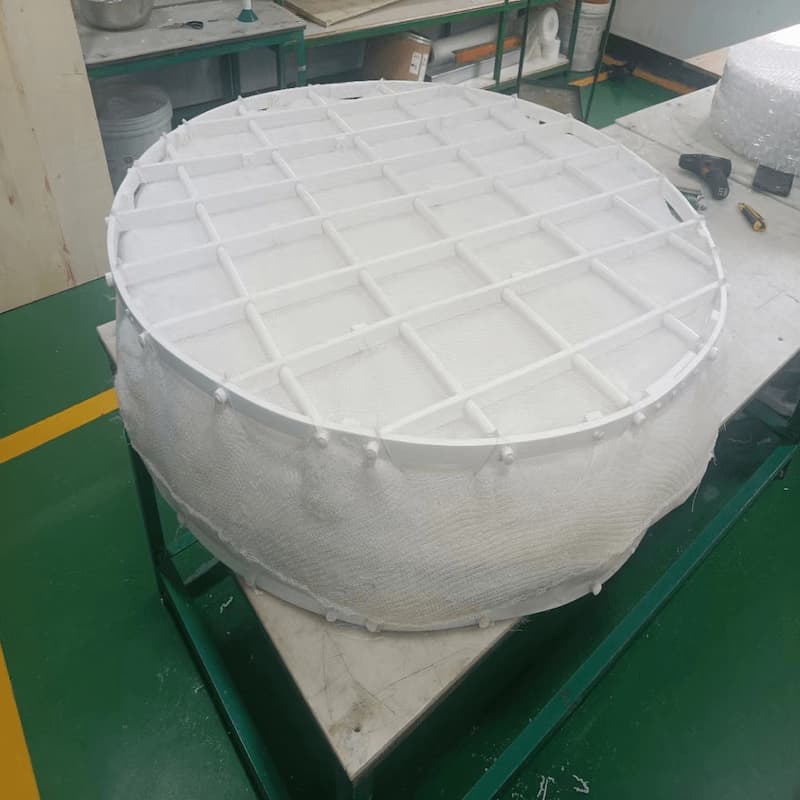
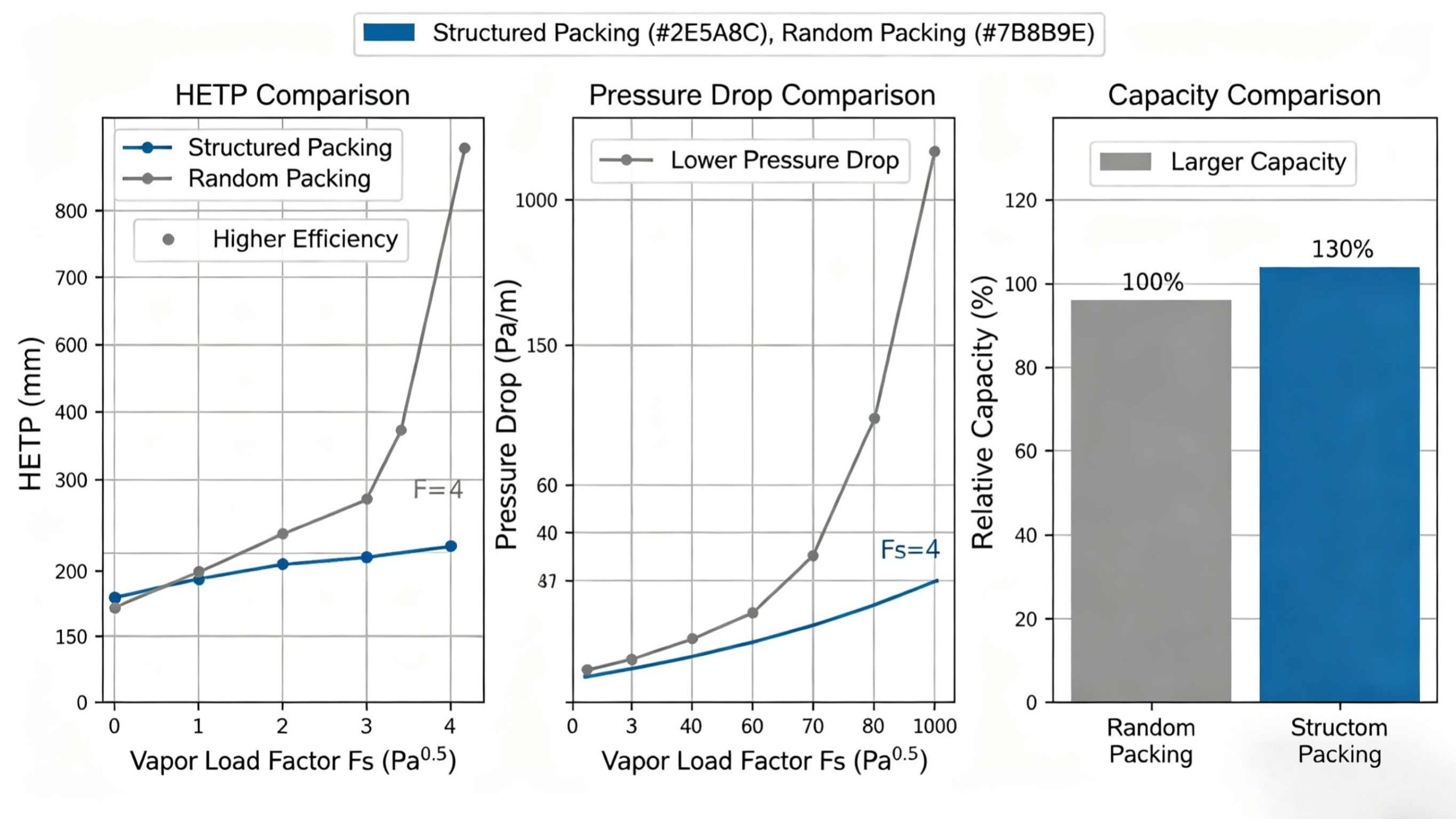
In petrochemical production, distillation columns are the core separation units, and packing materials, as internal components, directly determine column separation efficiency, capacity, and pressure drop. Structured packing, with its regular vapor-liquid flow channels, high surface area, low pressure drop, and high capacity, has become a strong alternative to random packing in modern distillation, especially for high-purity separation and energy-saving retrofits.
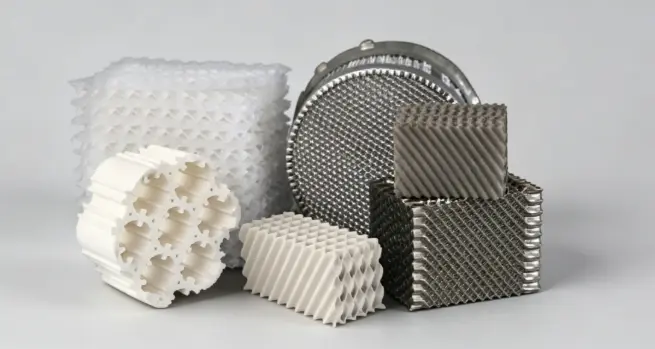
Key Insight: For procurement professionals, selecting structured packing involves not only material (stainless steel, carbon steel, plastic, ceramic) and cost considerations but also attention to long-term operational performance. Quality packing should maintain stable separation efficiency, resist fouling, and allow easy installation and maintenance throughout its design life, thereby reducing total lifecycle costs.
For instance, in benzene-toluene separation or ethanol-water distillation, selecting appropriate metal wire mesh packing or sheet corrugated packing can significantly increase theoretical stages, reduce reflux ratio, and directly lower steam consumption. The F-factor, typically measured in Pa0.5, becomes a critical parameter in evaluating packing performance under different vapor loads.
2. Selecting Distillation AYRTTER Packing: Precision Decision-Matching Process Requirements
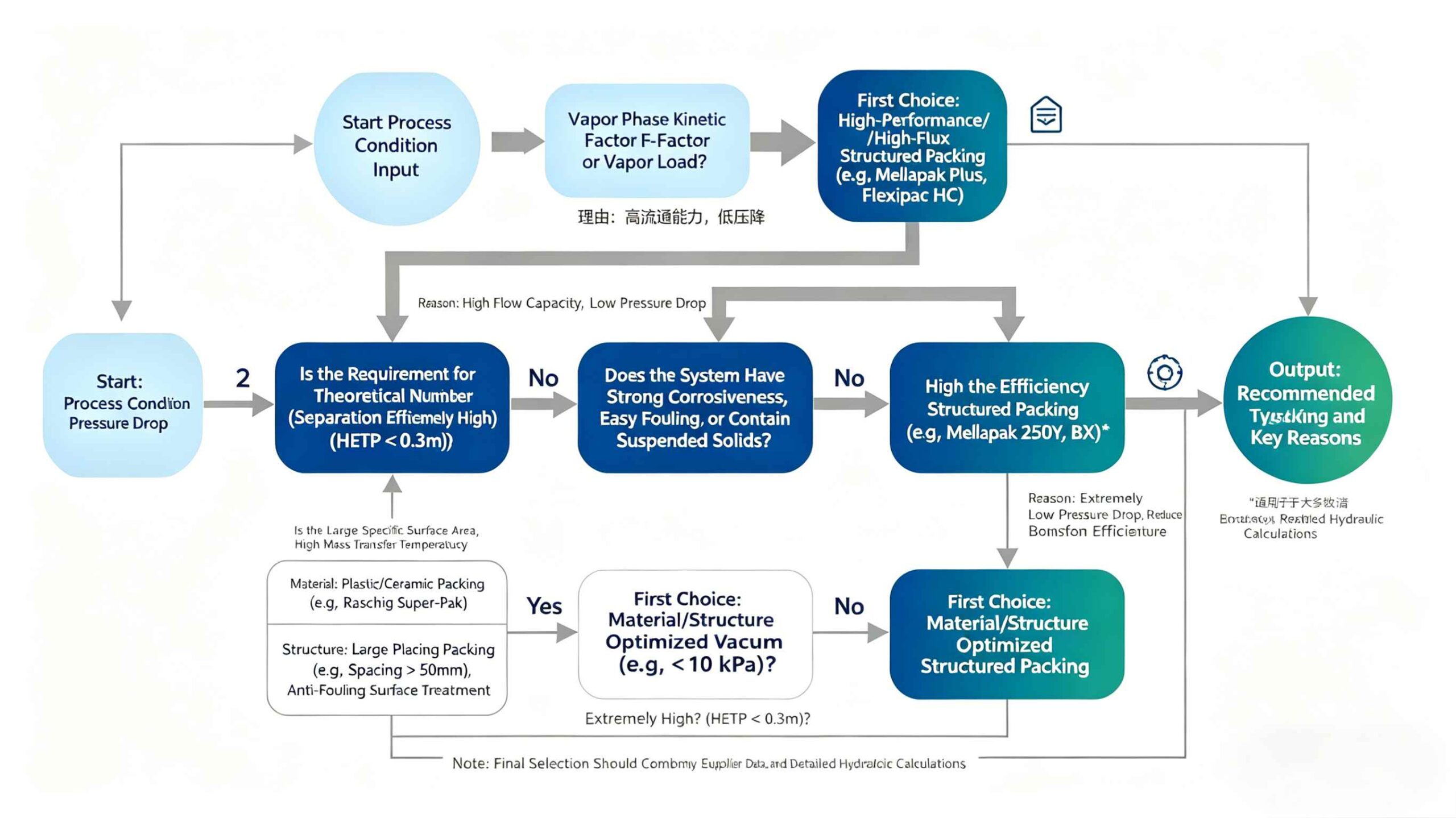
Technical directors face the challenge during process design or retrofit: how to choose the most suitable packing for specific process conditions from various types (e.g., Mellapak, Sulzer BX, Gempak)? This requires comprehensive evaluation:
- Separation System Characteristics: Including relative volatility, foaming tendency, thermal sensitivity, and corrosiveness. For fouling-prone materials, choose structured packing with anti-fouling design.
- Operational Flexibility Requirements: Packing should maintain high efficiency within expected load variations. Structured packing typically offers a wider operating window compared to traditional tray columns.
- Efficiency vs. Pressure Drop Trade-off: High theoretical stage packing often has higher pressure drop, requiring optimization considering reboiler temperature and condenser pressure. The pressure drop per theoretical stage (ΔP/NTS) is a key metric for comparison.
Effective decision-making relies on vendor-provided hydraulic verification and efficiency data. For critical applications, it’s strongly recommended to request vendors to perform process simulation based on actual fluid properties and provide performance guarantees. Explore our detailed guide on random packing selection criteria for complementary information.
3. Distillation Column Efficiency: The Ultimate Test for Packing
Project managers focus on overall project benefits. Improving distillation column efficiency (typically measured by Height Equivalent to a Theoretical Plate, HETP or overall tray efficiency) directly translates to increased capacity, reduced energy consumption, and product purity compliance, impacting return on investment period.
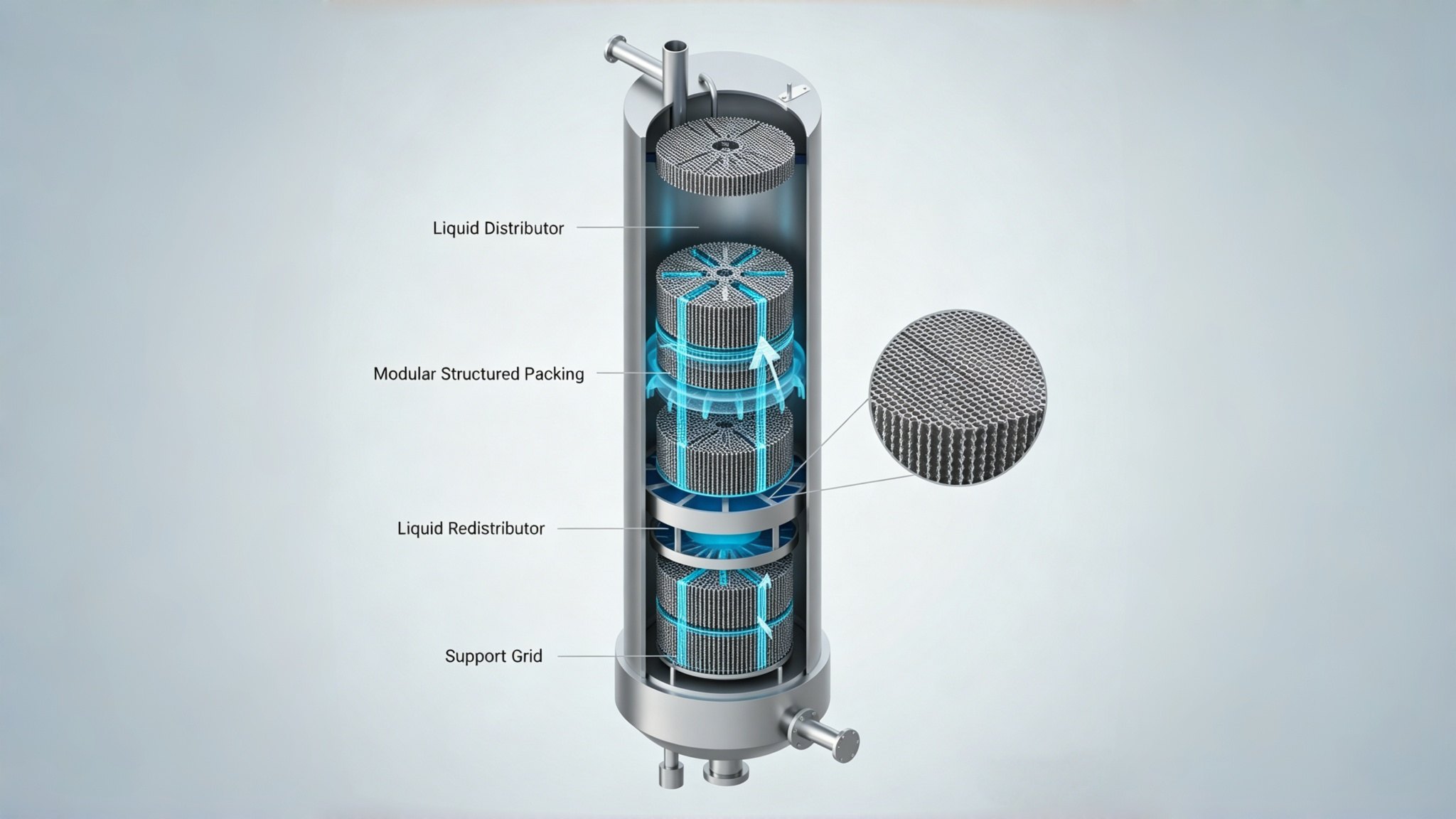
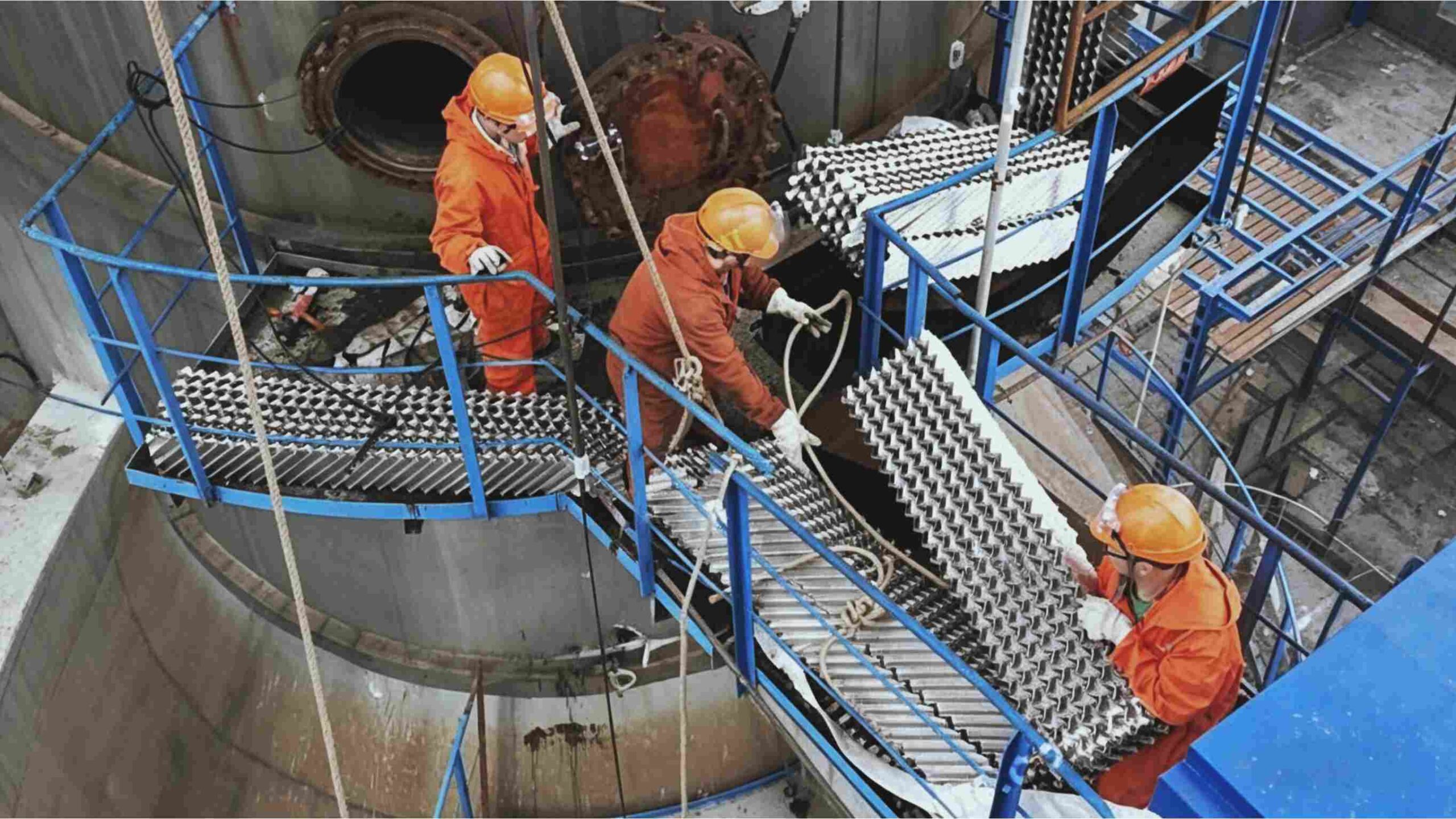
Packing efficiency is just the starting point. Matching column internals design (liquid distributors, redistributors, support grids) and professional loading practices (i.e., structured loading) are critical to prevent efficiency loss. Poor liquid distribution can reduce efficiency by over 30%. Therefore, in project execution, packing, internals, installation guidance, and performance testing should be managed and accepted as an integrated technical package.
The table below compares characteristics of common distillation packings for preliminary selection:
Note: The table provides general ranges. Specific values should be confirmed by suppliers based on actual fluid properties and column diameter. Learn more about column internals optimization for complete system design.
Expert Interpretation (FAQ)
Q1: In revamping old columns for capacity expansion, is it more economical to replace random packing with high-efficiency structured packing or simply increase column height?
A1: Detailed technical-economic analysis is required. In most cases, replacing existing random packing with low-pressure drop, high-capacity, high-efficiency structured packing can achieve 20%-50% capacity increase without changing column height, while simultaneously improving separation efficiency, offering a higher ROI. Increasing column height or sections is considered only when separation difficulty increases significantly (e.g., relative volatility close to 1). Proper distillation tower revamping strategies should be evaluated case by case.
Q2: During procurement, packing prices vary significantly between suppliers. How to evaluate the reasonableness of their technical proposals?
A2: Price differences stem from material quality, manufacturing precision, design data support (e.g., CFD simulation), and performance guarantees. Never compare unit price alone. Request suppliers to provide: 1) Detailed hydraulic verification report for the project; 2) References for similar systems; 3) Clear guarantees for HETP and pressure drop. Paying a premium for “validated design data and performance guarantees” is more economical than long-term operational losses due to underperformance.
Q3: How does structured packing installation affect overall column efficiency, and what are best practices?
A3: Installation quality directly impacts efficiency by 15-40%. Best practices include: 1) Professional loading teams with proper training, 2) Verification of liquid distribution before commissioning, 3) Avoiding damage during installation, and 4) Proper bed settling and inspection. Even the best packing design can fail with poor installation. Consider structured packing installation guidelines for detailed procedures.
Optimize Your Distillation Operations Today
Are you evaluating packing solutions for a new project or retrofitting existing columns? Contact us for customized packing selection advice and hydraulic verification reports based on your specific fluid properties and operating conditions.
Click to learn more about our random packing and column internals success cases.
Final Note / Practical Takeaway
1. Systematic Selection: Treat packing selection as a systematic project encompassing fluid analysis, process simulation, internals matching, and installation guidance. Collaborate closely with suppliers with proven engineering expertise.
2. Focus on Total Lifecycle Cost: For technical directors and project managers, shift the decision baseline from “procurement cost” to total lifecycle cost, emphasizing packing’s efficiency durability, energy savings, and maintenance accessibility.
3. Verification and Guarantees: Clearly define key performance indicators (e.g., HETP, capacity, pressure drop) guarantees and testing/acceptance methods in contracts and technical agreements. This is central to project risk control.
“Distillation column efficiency is 90% determined at the design stage. The optimal selection of packing and internals is the most critical part of this 90%.”
© 2026 Petrochemical Technology Series. All rights reserved. | Week 3: Structured Packing for Distillation Optimization