When a packed tower handles aggressive chemicals, selecting packing only by price can become expensive very quickly.
Corrosion, contamination, excessive pressure drop, and poor liquid distribution can reduce separation efficiency or force premature replacement. This is especially important in electronic chemicals, semiconductor processing, and pharmaceutical production, where material purity matters just as much as mass-transfer performance.
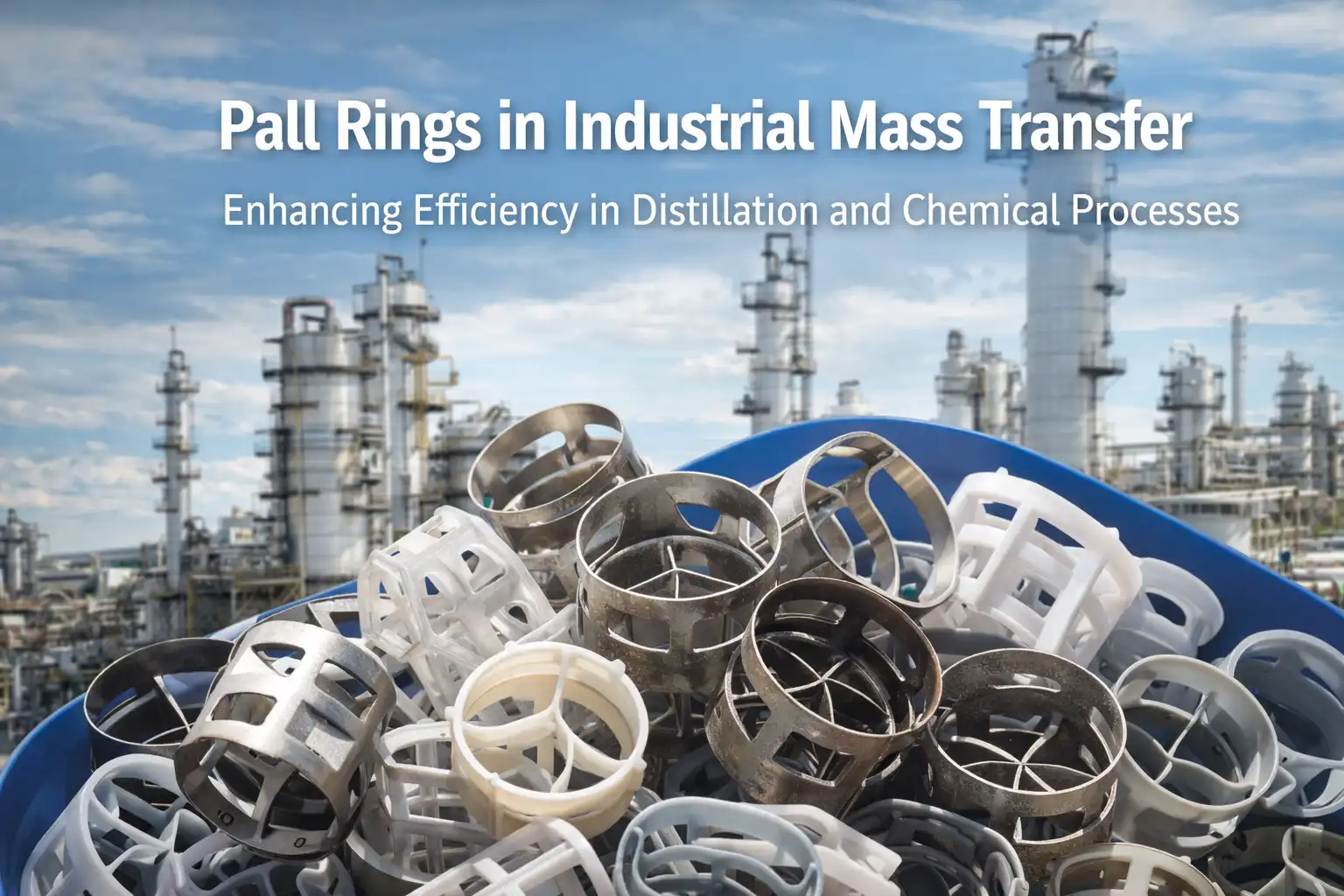
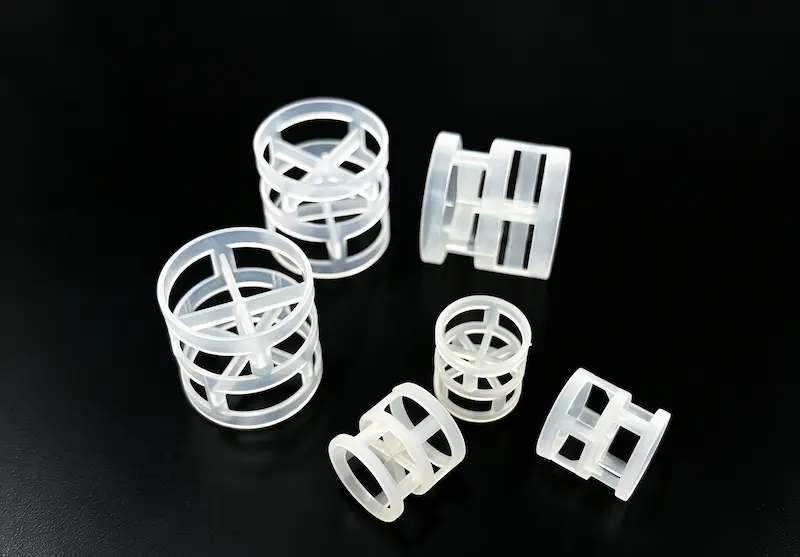
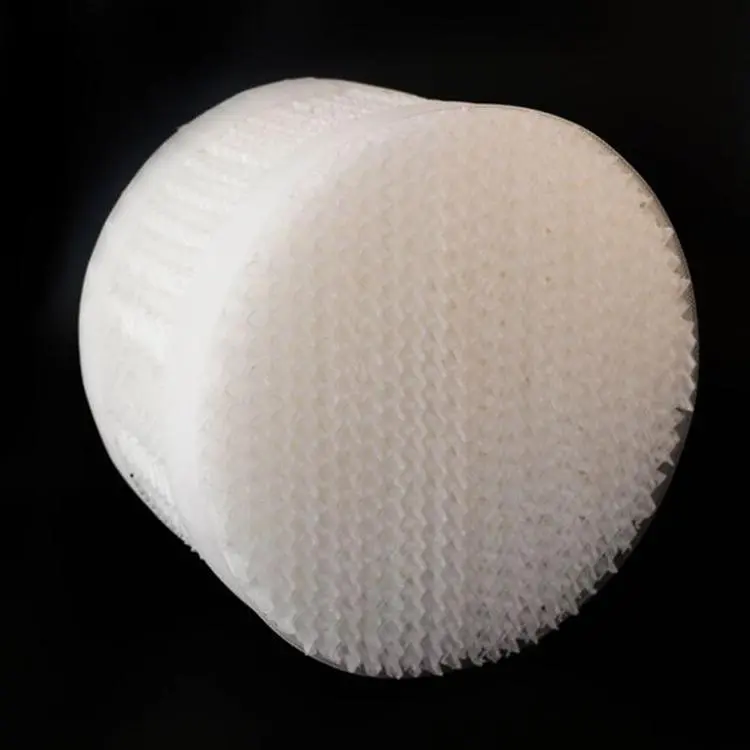
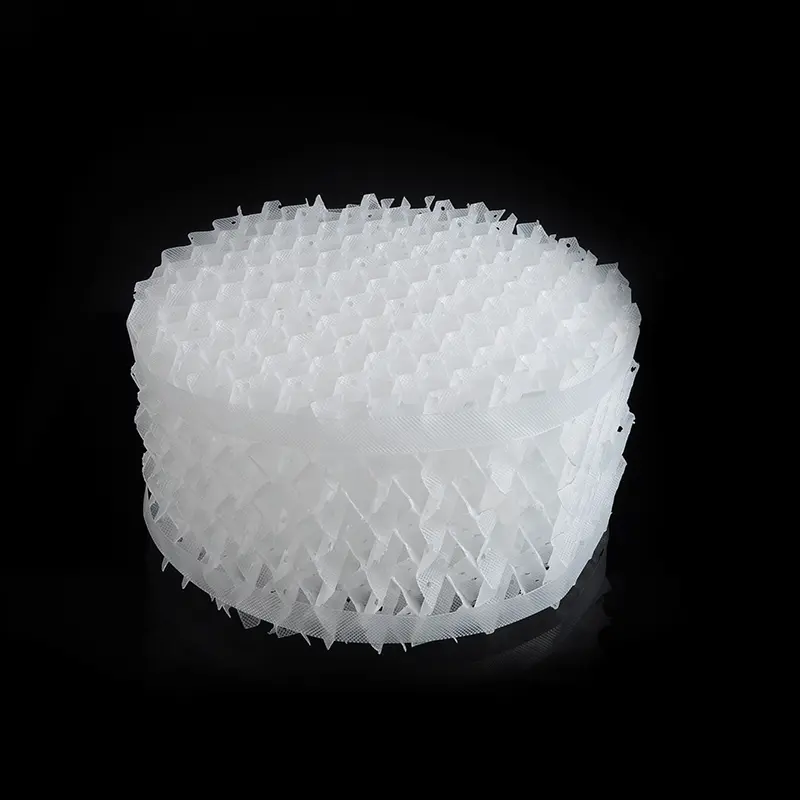
PFA Pall Ring is designed for these demanding applications. Made from virgin PFA, it combines strong chemical resistance with an open Pall Ring structure that improves gas-liquid flow through the packed bed.
Micro Summary: Is PFA Pall Ring Right for Your Tower?
- Choose PFA Pall Ring when the process medium is highly corrosive.
- Choose it when contamination from packing material must be tightly controlled.
- Consider it when low pressure drop is important.
- Consider PFA when operating temperatures exceed the practical range of conventional PP packing.
- It is particularly relevant for electronic chemicals, semiconductor production, pharmaceutical processing, and high-purity chemical separation.
If your process is a conventional medium-temperature scrubber and ultra-high purity is unnecessary, PP packing may provide a more economical solution.
How Is a PFA Pall Ring Constructed?
The Pall Ring design is an evolution of the traditional Raschig Ring.
Instead of using a completely closed cylindrical wall, the ring contains two staggered rows of punched windows. Each opening includes an inward-bent tongue extending toward the center of the ring.
This geometry creates additional pathways for gas and liquid movement inside the packed bed. Approximately 30% of the ring wall is open, helping reduce resistance to gas flow while increasing effective gas-liquid contact.
The structure addresses one of the main limitations of traditional Raschig Rings: the relatively closed cylindrical wall that restricts internal flow paths.
Why Use PFA Instead of Conventional Plastic Packing?
The main advantage is not simply that PFA is a more advanced plastic. The real question is whether your operating conditions justify the material.
PFA combines chemical inertness comparable with PTFE with good melt-processability. According to the supplied technical information, its long-term service temperature range can extend from approximately -196°C to 260°C.
This makes PFA particularly useful where polypropylene or other conventional plastics may reach their chemical-resistance, purity, or temperature limits.
 |  |
Key Performance Characteristics
| Parameter | PFA Pall Ring |
|---|---|
| Void Fraction | Up to 93.4% |
| Wall Open Area | Approx. 30% |
| Long-Term Service Temperature | Approx. -196°C to 260°C |
| Material | Virgin PFA |
| Common Sizes | DN16, DN25, DN38, DN50, DN76, DN100 |
| Packing Type | Random Packing |
The supplied technical data also indicates that compared with conventional Raschig Rings, the Pall Ring structure can increase processing capacity by more than 50% while reducing pressure drop.
However, buyers should not treat these figures as a guaranteed value for every tower. Actual capacity and pressure drop depend on tower diameter, packing size, gas and liquid rates, fluid properties, and operating conditions.
Where Are PFA Pall Rings Used?
PFA Pall Rings are primarily selected for high-purity and highly corrosive separation processes.
- Electronic-grade chemical purification
- HF processing
- Nitric acid production
- Semiconductor manufacturing
- Pharmaceutical production
- Fine chemical processing
- Hydrofluoric acid distillation
- Hydrochloric acid recovery
- Absorption and desorption towers
- Decarbonization and desulfurization systems
PFA Pall Rings are especially relevant where the process places strict limits on metal-ion contamination and material extractables.
PFA Pall Ring vs. PP Packing: Which Should You Choose?
If Your Main Priority Is Cost
Choose PP or another conventional plastic packing when temperature, chemical compatibility, and purity requirements allow it.
If Your Process Contains Highly Aggressive Chemicals
PFA should be evaluated because its chemical resistance is suitable for much more demanding environments.
If Semiconductor or Electronic-Grade Purity Is Required
PFA is usually a stronger candidate because contamination risk may be more important than the initial packing cost.
If the Tower Operates at Elevated Temperature
Check the actual continuous operating temperature before selecting PP simply because it is less expensive.
A cheaper packing that deforms, contaminates the process, or requires frequent replacement is rarely the cheaper solution over the full operating life of the tower.
Common Purchasing Mistakes
1. Choosing Only by Packing Diameter
Packing size affects hydraulic performance, pressure drop, capacity, and gas-liquid distribution. A larger ring is not automatically better.
2. Ignoring Purity Requirements
A material may survive the chemical environment but still be unsuitable if extractables, particles, or metallic contamination are critical.
3. Comparing Only the Price per Cubic Meter
PFA packing and standard PP packing serve very different applications. Comparing them only by unit price can result in the wrong material being selected.
4. Failing to Confirm Actual Operating Conditions
Before requesting a quotation, prepare the following information:
- Tower diameter
- Operating temperature
- Liquid composition
- Gas composition
- Gas and liquid flow rates
- Required separation duty
- Expected packing height
Available Sizes and Customization
Common PFA Pall Ring sizes include DN16, DN25, DN38, DN50, DN76, and DN100.
Depending on the project, support may include pre-shipment samples, dimensional inspection reports, material customization, and OEM production.
Recommendation
If your project involves high-purity chemicals, severe corrosion, and demanding temperature conditions, PFA Pall Ring should be included in your material shortlist.
If your application is a conventional scrubber operating at moderate temperature and contamination control is not critical, PP packing may provide a better cost-performance ratio.
The objective is not to select the most expensive packing. It is to select the packing that matches the actual process conditions.
Need Help Selecting the Right Packing?
If you are unsure which Pall Ring size or material matches your tower, send us your tower diameter, operating temperature, media composition, and approximate gas/liquid load. These details make it much easier to evaluate whether PFA is technically justified before quotation.