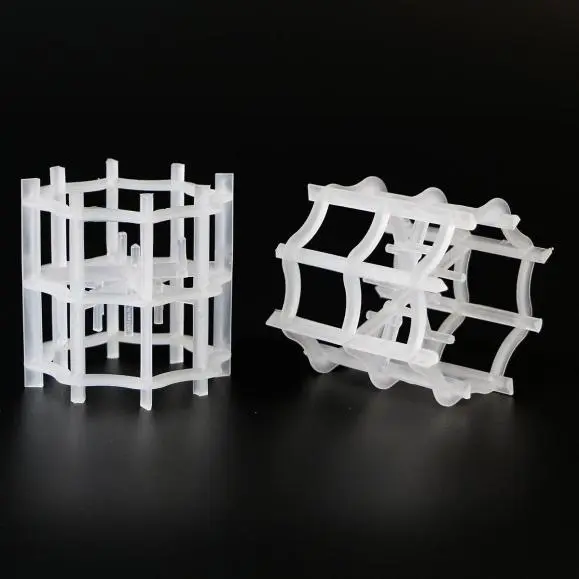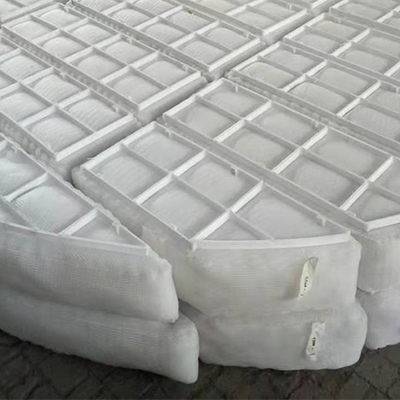
Random packing (e.g., Pall rings, saddles) is low-cost and fouling-resistant; structured packing (e.g., corrugated sheets) offers high efficiency and low pressure drop. Column diameter is the key economic variable.

1. Core Differences
Random packing: specific surface 50-150 m²/m³, pressure drop 100-300 Pa/m, easy installation, suitable for solids-laden streams. Structured packing: specific surface 200-1000 m²/m³, pressure drop only 50-150 Pa/m, high mass transfer efficiency, but requires precise installation and good liquid distributors.
2 . How Diameter Affects Economics
Size matching: Random packing requirea s column/packing diameter ratio >8; small columns need small packing. Structured packing has no such limit.
Vessel cost: Higher void fraction allows 10-30% smaller diameter for the same capacity, saving steel and foundation costs.
Packing volume: Volume increases with diameter squared; in large columns, the higher unit cost of structured packing is magnified.
3. Recommendations by Diameter
Small (<1m): Random packing is cheaper – simple installation, low total cost.
Medium (1-2m): Choose structured for high precision/low pressure drop; random for solids or modest requirements.
Large (>2m): Structured packing saves vessel cost by reducing diameter, offsetting its higher price; but random still works for simple scrubbing.
Very large (>4m): For simple separations, random packing’s cost advantage is unbeatable.

Economic Comparison
Random packing costs 30-60% less initially, suitable for small-to-medium projects. Structured packing offers lower pressure drop and longer life, yielding significant energy savings in large columns. Selection should consider vessel cost, packing cost, energy, and maintenance – not just unit price.
Summary
Small columns: random (cheap, easy). Large columns: structured for high precision, random for simple duties. Very large, simple duties: random wins. Lifecycle cost matters more than unit price.
FAQ: Random Packing vs. Structured Packing for Different Column Diameters
1. What is the main difference between random packing and structured packing?
The main difference is in cost, efficiency, pressure drop, and installation requirements. Random packing, such as Pall rings and saddles, is usually easier to install, lower in initial cost, and more suitable for streams that may contain particles or fouling materials. Structured packing, such as corrugated sheet packing, provides higher mass transfer efficiency and lower pressure drop, but it requires more accurate installation and a better liquid distributor. If the project needs simple operation and lower upfront cost, random packing is often preferred. If the tower requires high efficiency, low pressure drop, or energy savings, structured packing may be the better choice.
2. Which packing is more cost-effective for small columns?
For small columns below 1 m in diameter, random packing is usually more cost-effective. Small towers normally do not require a very large packing volume, so the lower unit price and simple installation of random packing create a clear cost advantage. Another important point is size matching: random packing requires a proper column-to-packing diameter ratio, so smaller packing sizes are commonly used in small columns. Structured packing can still be used when high precision or very low pressure drop is required, but for many general small-column applications, random packing is the more economical option.
3. When should buyers choose structured packing instead of random packing?
Buyers should choose structured packing when the process requires higher separation efficiency, lower pressure drop, better energy performance, or a smaller tower diameter under the same capacity. Structured packing has a higher specific surface area and lower pressure drop than many random packing options, which can improve mass transfer performance and reduce operating energy cost. It is especially useful in medium and large columns where reducing tower diameter, improving efficiency, or lowering long-term energy consumption can offset the higher packing cost. However, it also needs proper liquid distribution and careful installation, otherwise the expected performance may not be achieved.
4. Is random packing still suitable for large or very large columns?
Yes, random packing can still be suitable for large or very large columns, especially when the process is simple, fouling risk is high, or the project focuses mainly on lower investment cost. In large columns above 2 m, structured packing may reduce tower diameter and save vessel cost, but random packing can still be a practical choice for simple scrubbing or less demanding separation. In very large columns above 4 m, the packing volume increases significantly, so the lower cost of random packing can become very important. For simple duties, random packing may remain the most economical solution.
5. What factors should be compared before selecting tower packing?
Before selecting tower packing, buyers should compare tower diameter, packing cost, vessel cost, pressure drop, mass transfer efficiency, liquid distribution quality, fouling risk, installation difficulty, maintenance cost, and long-term energy consumption. Looking only at the unit price can lead to the wrong decision. Random packing may be cheaper at the beginning, but structured packing may save energy and reduce tower size in some projects. The better choice depends on the total lifecycle cost, not just the first purchase price. If the tower is small and the process is simple, choose random packing. If the tower needs high efficiency or low pressure drop, choose structured packing.